
black letter T

Cambridge-based T-Therapeutics has raised $133 million (€118 million) in an oversubscribed Series B financing to advance two experimental T-cell engager therapies for cancer and autoimmune diseases into clinical trials. The round brings the University of Cambridge spinout’s total Series A and B funding to $224 million.
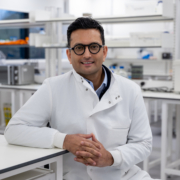

Alethio's CEO, Rohit Batta

University of Oxford spinout Alethio Therapeutics has raised $90 million (about €80 million) to take its G6B-targeting antibody ATX-011 into clinical trials for essential thrombocythemia. The proceeds will fund ATX-011 through Phase 1/2a studies, with the goal of preparing it for Phase 3 development, while advancing additional programs toward applications to begin clinical trials.

a statue in Beaune, France

French pharmaceutical group Servier has suffered a major setback just four months after completing its $1.55 billion upfront acquisition of Edgewise Therapeutics’ muscular dystrophy business. Sevasemten, the centerpiece of the deal, has failed its pivotal trial in Becker muscular dystrophy, despite encouraging results from earlier studies.

Photo credit: Wacker

As advanced therapies and vaccines reshape healthcare, Wacker ­Biotech is emerging as a CDMO partner of choice. With decades of experience and integrated ­expertise spanning pDNA, RNA, LNP formulation, GMP production, and targeted LNP conjugation, the company offers end-to-end support to accelerate cell and gene therapies, RNA-based medicines, and next-generation vaccines from development through commercialization.

Credit: Victor via Unsplash+

Swedish biotech BioArctic has lost a partnership with Swiss drugmaker Novartis to develop a potential treatment for neurodegenerative diseases using its BrainTransporter technology. The termination eliminates the prospect of up to $772 million (€691 million) in additional payments, although BioArctic retains the $30 million (€27 million) upfront payment.

Jens Nielsen

Denmark-based BioInnovation Institute (BII) is expanding its European CardioMetabolic Bridge to Munich and Berlin. Backed by up to DKK 450 million (around €60 million) from the Novo Nordisk Foundation, the initiative aims to accelerate the translation of academic research into metabolic and cardiovascular diseases into drug development and biotech companies. Following the establishment of an innovation hub in London, the two German locations are its next European sites. Laboratory infrastructure is planned, but details will not be finalized for several months.

Meanwhile in Biotech - European Biotechnology news roundup

AstraZeneca is cutting costs and early cancer programs, while Ayrmid is pursuing another struggling U.S. drugmaker. This week’s six updates also include a Huntington’s gene therapy review, mixed MS data and new plans for vaccines and hypertension treatment.

Fresenius flag

Fresenius has secured options on 37 biosimilars from WuXi Biologics, significantly expanding its biopharma ambitions through a development agreement. The deal comes as numerous high-selling biologics approach the end of their patent protection and biosimilars could become an important tool for health care systems to contain costs. Fresenius aims to double its biosimilar revenue to nearly €2 billion, bringing Sandoz’s league at least within sight.

Picture credit: Sonuvo

The Basel region is one of the world’s leading life-science clusters. ­Pharmaceutical companies, biotech firms and research institutions benefit from a unique combination of talent, infrastructure and international collaboration. As the industry ­continues to grow, the demand for ­scalable laboratory and office environments within this innovation ecosystem is increasing.

large reptile on the road

Swedish biotech Alligator Bioscience has agreed to sell its CD40-targeting cancer immunotherapy mitazalimab to Canadian drug developer Biossil for $750,000 (€670,000) upfront, with up to $108 million (€97 million) in contingent milestones and additional royalties. The deal follows Alligator’s decision in July to discontinue independent development of the drug and concentrate its resources on another oncology program.