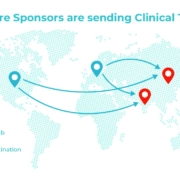
Three developments over the past year have changed what “outsourcing” a clinical trial actually means. New U.S. tariffs on patented pharmaceuticals, a revised Chinese trial standard, and faster approval rules in Europe, the UK and Australia are all forcing sponsors to look again at where trials run and who runs them.
ADVERTISEMENT
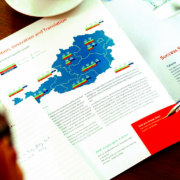
Austria continues to strengthen its position as one of Europe’s most dynamic life sciences locations. New infrastructure, a coordinated national cluster landscape and targeted funding initiatives are reinforcing the country’s role at the interface of research, industry and healthcare.
Every biopharmaceutical company reaches the same crossroads when selecting a contract development and manufacturing (CDMO) partner. The temptation is to optimize for the lowest quote or the shortest lead time, or both. But the most consequential question is rarely asked directly: which partner will actually carry your program from early-phase clinical through commercial launch without a single avoidable disruption?
As advanced therapies and vaccines reshape healthcare, Wacker Biotech is emerging as a CDMO partner of choice. With decades of experience and integrated expertise spanning pDNA, RNA, LNP formulation, GMP production, and targeted LNP conjugation, the company offers end-to-end support to accelerate cell and gene therapies, RNA-based medicines, and next-generation vaccines from development through commercialization.
The Basel region is one of the world’s leading life-science clusters. Pharmaceutical companies, biotech firms and research institutions benefit from a unique combination of talent, infrastructure and international collaboration. As the industry continues to grow, the demand for scalable laboratory and office environments within this innovation ecosystem is increasing.
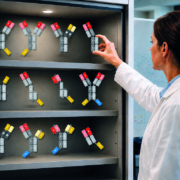
New biologic logic – Multispecific antibodies extend targeted therapy beyond one antigen or pathway. By combining binding sites, cell recruitment and defined valencies within one molecule, they enable mechanisms that conventional monoclonal antibodies or their combinations cannot reproduce with the same spatial and pharmacological control.
AI can already reduce administrative work, improve decision-making and streamline parts of clinical development. But its impact is often overstated. Evidenze’s Raphaela Schnurbus explains where AI is delivering measurable value today, where human expertise remains essential and what biotechs should ask before buying in.
At the IZB in Martinsried, Invitris is developing a cell-free platform to turn digital sequences into proteins, antibodies and phages within hours. CEO Patrick Grossmann explains why AI is shifting the bottleneck from drug design to manufacturing, how Phactory™ addresses phage production and why microgravity could open new possibilities.
Helping biopharmaceutical innovators build scalable, manufacturable, and commercially viable processes from the start.
AATec is advancing ATL-105, a new recombinant version of alpha-1 antitrypsin for inhalation, into clinical development for chronic respiratory diseases. Rüdiger Jankowsky, CEO, and Gabriele Matschiner, Chief Development Officer, explain the development program, the choice of bronchiectasis and the upcoming Phase 1b/2a trial.