Danish BioInnovation Institute builds a bridge to Germany
Denmark-based BioInnovation Institute (BII) is expanding its European CardioMetabolic Bridge to Munich and Berlin. Backed by up to DKK 450 million (around €60 million) from the Novo Nordisk Foundation, the initiative aims to accelerate the translation of academic research into metabolic and cardiovascular diseases into drug development and biotech companies. Following the establishment of an innovation hub in London, the two German locations are its next European sites. Laboratory infrastructure is planned, but details will not be finalized for several months.
Why it matters: The project is part of an effort to build a cross-border innovation ecosystem that translates scientific discoveries in cardiometabolic research into new therapies more quickly. The initiative is backed by the Novo Nordisk Foundation, which is providing up to DKK 450 million (around €60 million) over six years. Copenhagen-based BII will use the funding to identify promising academic projects, support their development and, ideally, turn them into new drug candidates and biotech companies. BII itself has been active in Copenhagen for around eight years and received a further funding injection of approximately €850 million from the foundation in January.
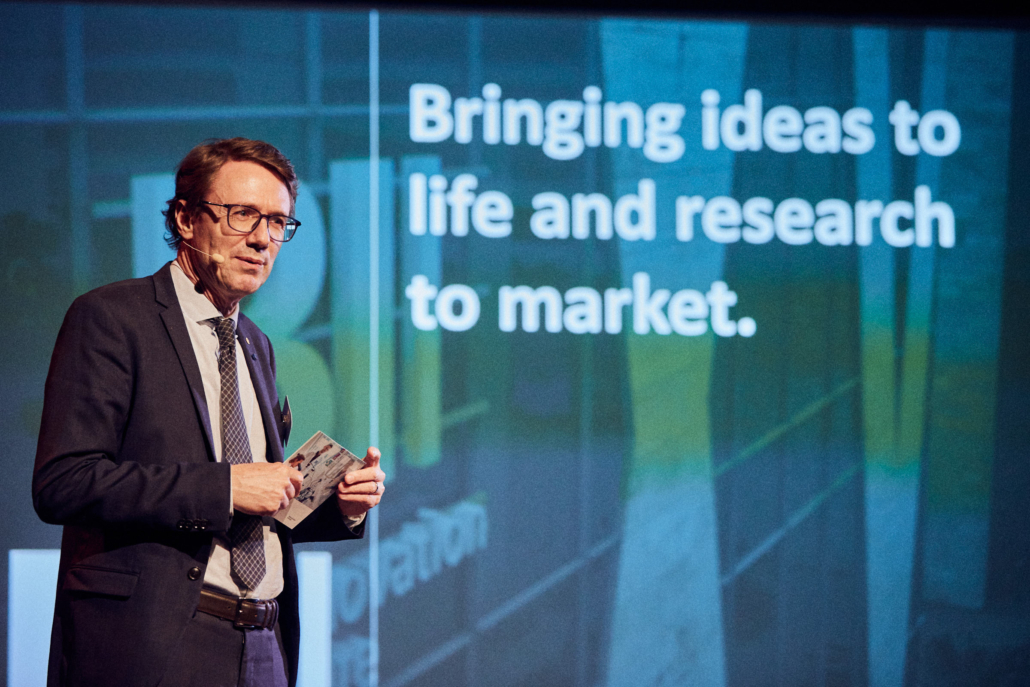
“Germany has outstanding scientific expertise and is one of Europe’s strongest life sciences locations. In Munich and Berlin, excellent research meets entrepreneurial spirit, infrastructure and industry networks. In other words, exactly what young companies need to grow,” BII CEO Jens Nielsen said in an exclusive interview with our sister publication |transkript ahead of the announcement.
From academic discovery to drug candidate: BII’s starting premise is that Europe has strong science in cardiometabolic research but too rarely succeeds in turning it into new medicines and companies. Significant hurdles stand between a promising discovery in an academic laboratory and a validated drug candidate. Funding, specialized laboratory and development infrastructure, regulatory expertise and access to industry partners and investors are all needed.
This is precisely where the CardioMetabolic Bridge aims to step in. Selected projects can receive funding, laboratory space, drug discovery and development capabilities, mentoring and connections to investors and industry partners. Across its hubs, BII intends to work with universities, hospitals and research institutions to identify suitable projects and support their translation.
The initiative focuses on cardiometabolic diseases. These include obesity, Type 2 diabetes and cardiovascular diseases — areas of considerable medical and health policy importance, with a substantial need for new therapeutic approaches.
Between the lines: The expansion is independent of the company Novo Nordisk, although it, too, is strategically building connections with innovation hubs in the U.S., Asia and the U.K. In Germany, however, BII is taking its own path. “With infrastructure of our own, we can help innovative projects move forward,” Nielsen said. Few incubators focus on cardiometabolic research, he added, and BII’s extensive experience and expert network could provide crucial support in translating that research.
The two locations: By choosing Munich and Berlin, BII is targeting two of Germany’s most established life sciences regions. Both have extensive research communities, university hospitals, biotech companies and connections to investors. For BII, the aim is likely to be to connect these existing structures more closely with one another and with its other European locations.
The approach does not necessarily involve building a new innovation center with its own infrastructure at every location. Instead, the aim is to create a network that provides access to existing scientific and entrepreneurial resources and supports selected projects across national borders. Exactly how responsibilities will be divided among the locations, and which institutions in Germany are already involved, will become clearer as the initiative takes shape.
“Munich is so strong in research into cardiovascular and metabolic diseases, for example at the Helmholtz Center, but also at its two universities. We fit in perfectly there,” Nielsen explained. “In Berlin, we were convinced by the ecosystem around Charité and the Max Delbrück Center. There is both the willingness and the room to scale up innovations here.”
The big picture: Munich and Berlin complement the London hub at Victoria House and BII’s headquarters in Copenhagen. Through this network, the institute aims to connect scientific excellence and entrepreneurial resources across several European life sciences centers. For young companies, this could make it easier to access expertise, funding and partners that might not be available in their home location alone.
The initiative also illustrates how the Novo Nordisk Foundation is expanding its role beyond funding individual research projects. The CardioMetabolic Bridge is intended not only to support basic research but also to address a specific gap in Europe’s innovation chain: the early stage between academic discovery, preclinical validation and company formation.
There will be a hub manager whose role goes beyond scouting to include practical help with business plans, experts in residence and financial support for early-stage work. “We have deep pockets, but the money should always go only toward the early stages of projects. Subsequent steps will require an additional source of funding, and that is where we will be thinking in terms of consortia,” Nielsen said.
The broader thinking is that cardiometabolic conditions are increasingly viewed as a common underlying basis for damage associated with conditions ranging from neurodegenerative diseases and inflammation to cancer. “We see a transformation here that is still in its very early stages. If we can make better decisions about disease risk, we can achieve significant progress in patient stratification and, ultimately, in targeted treatment,” Nielsen said confidently.
What’s next: Whether the innovation network delivers a lasting acceleration in drug development will have to be measured through concrete projects. What matters will be how many research findings actually progress into preclinical development, clinical candidates and new companies and whether the initiative also improves access to follow-on funding and industrial development partners. Novo Nordisk has no ties to the projects: There are “no strings attached,” as the expression goes. If the Danish pharmaceutical company is interested in a BII project, it will be treated in exactly the same way as any other company, according to the institute.