SRTD raises €31.5M seed round to develop cell-selective RNA therapies
Germany-based biotech company SRTD Biotech has closed a €31.5 million seed funding round. At the heart of its approach is an RNA technology designed to address a fundamental challenge facing many RNA-based therapies: How can the activity of a therapeutic molecule be restricted to specific cells without unnecessarily harming healthy tissue?
The funding round is led by Mérieux Equity Partners. Alongside NRW.BANK (contributing €7 million to the round), the Boehringer Ingelheim Venture Fund is also joining as a co-lead investor. Other participants include Lilly Ventures, High-Tech Gründerfonds (HTGF) and Freiburg-based family office Anobis. The capital will be used to advance the preclinical development of the company’s drug pipeline in cancer, autoimmune diseases and fibrosis, preparing the programs for clinical trials.
How it works: SRTD is developing a technology called selectively expressed RNA (seRNA). The approach combines the properties of mRNA with a type of molecular recognition system. Unlike conventional mRNA, which can trigger production of the encoded protein immediately after entering a cell, seRNA is designed to become active only when it encounters specific RNA markers in the target cell.
The principle is as follows: The therapeutic RNA first enters cells but remains inactive. Only when it encounters a characteristic, disease-specific RNA sequence does an antisense segment incorporated into the seRNA bind to the cell’s own RNA. This creates an RNA double strand that triggers expression of the therapeutically active protein. The protein can then, for example, selectively drive a tumor cell into programmed cell death. In healthy cells that lack the corresponding RNA recognition signal, the seRNA is instead designed to remain inactive and be degraded.
In a sense, this shifts the selectivity of treatment from the question of where a drug is delivered to the question of which cell it actually becomes active in. This could be particularly relevant for therapeutics that are potent enough to destroy diseased tissue but could cause significant side effects if activated in healthy cells.
The technology has a modular design and is intended to be adaptable to different diseases by exchanging the recognition sequences and therapeutic components. The platform is complemented by proprietary fusogenic lipid nanoparticles (fLNPs), designed to enable efficient uptake of RNA into cells and organ-specific distribution. It also includes a platform for synthetic biology, bioinformatics and AI-assisted RNA design.
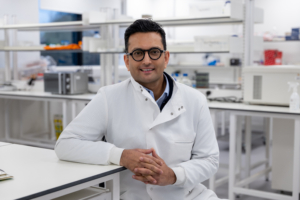
Toward the clinic: The scientific foundations of the technology originated at Forschungszentrum Jülich in Germany. SRTD was founded in 2019 by Bernd Hoffmann and Heribert Bohlen. Hoffmann remains closely involved in the scientific development of the technology.
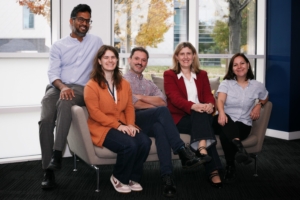
With the arrival of the new investors, the management team is also being expanded. Matthias Alder is taking over as CEO. He previously held leadership positions at publicly listed biotech companies in Europe and the U.S. and, according to the company, has been involved in transactions in the biotechnology sector with a combined value of more than $10 billion. Heinz Koeppl, a professor at TU Darmstadt and head of its Center for Synthetic Biology, will become CTO. Jens Hennecke joins the leadership team as chief business officer.
A study published in Nature Communications in January 2025 provided an early proof of concept for the seRNA platform. Researchers developed an seRNA construct designed to trigger production of caspase-3, a protein that induces programmed cell death, selectively in cancer cells. In a mouse model of glioblastoma, direct injection of the therapeutic construct into early-stage brain tumors significantly reduced tumor size, without detectable side effects. The findings demonstrated the technology’s potential for selectively destroying cancer cells while sparing healthy tissue.
However, there is still a long way to go from a working principle in an animal model to a clinically effective and safe therapy. For RNA therapeutics in particular, efficient distribution throughout the body, uptake into the right cells and avoidance of unwanted immune reactions remain key development challenges. Results from mouse models also cannot automatically be translated to humans. SRTD must therefore demonstrate in the next stages of preclinical development that the combination of cellular recognition, RNA activation and therapeutic protein production actually achieves the desired selectivity.
NRW.BANK expands its life sciences investments: For NRW.BANK, the official promotional and development bank of the German federal state of North Rhine-Westphalia (NRW), the investment in SRTD is already its second publicly announced major biotech investment of the year. In March, the development bank invested €3.5 million through NRW.Venture in the seed financing of Dortmund-based iDEL Therapeutics. The company raised a total of €9 million and is developing a drug delivery system designed to transport therapeutic substances directly into the interior of tumor cells. Alongside NRW.BANK, investors included Gründerfonds Ruhr and KHAN Technology Transfer Fund II, with BioMedVC leading the round.
SRTD now adds another €7 million to that total. The two investments represent different technological approaches in oncology: iDEL focuses on the targeted intracellular delivery of therapeutics, while SRTD addresses the selective activation of therapeutic RNA in specific cells. Together, NRW.BANK has committed €10.5 million across the two publicly disclosed funding rounds.
The investment in SRTD is being made through the new NRW.Venture EU Tech&Scale fund. Available for investment since February 2026, the fund enables the development bank to take larger stakes in capital-intensive technology companies at later financing stages. Backed by an InvestEU guarantee from the European Commission, the initiative aims to mobilize up to €200 million in additional funding for young growth companies. Total investments of up to €30 million per company are possible.
For NRW, this sends a signal that public financing should support companies beyond their founding and early scientific validation stages. Capital-intensive biotechnology companies, in particular, often require several funding rounds before a research platform can become a product in clinical development. SRTD is a current example: An RNA concept developed at the Jülich research center is now intended to become a therapeutic platform capable of competing internationally.