
Organoids: new Roche research centre in Basel will focus on alternative model systems
Animal testing or organoids—this question is increasingly being answered in favour of organoids. Yet robust model systems still require further research and, crucially, validation. More large pharmaceutical companies are now pursuing this goal, whether by acquiring relevant start-ups or by establishing their own research centres, as Roche has just done in Basel.
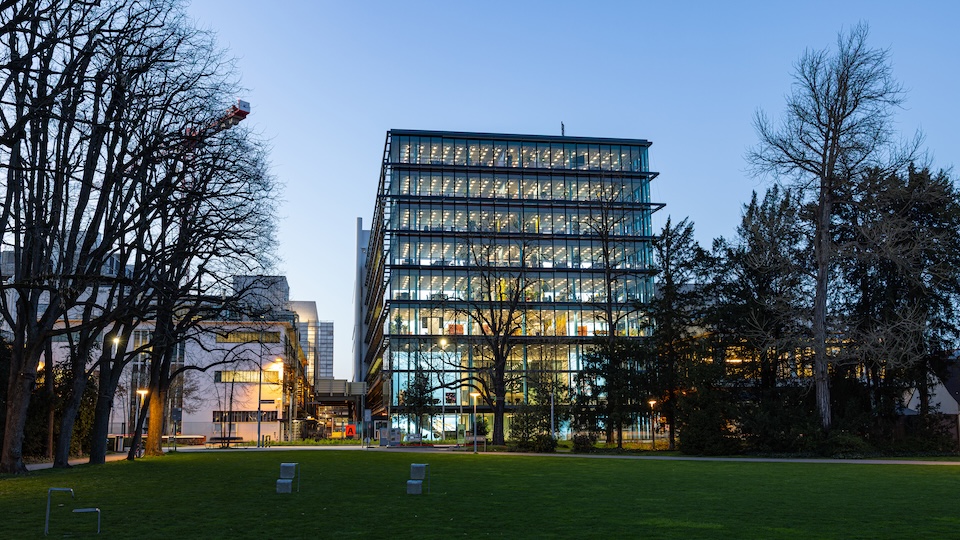
The pharmaceutical group Roche is further expanding its research infrastructure in Switzerland, with a clear focus on novel biological model systems. In Basel, the company has opened a new building for the Institute of Human Biology (IHB), which is set to play a central role in drug discovery.
The facility forms part of a broader investment programme of around CHF 1.4 billion in the Basel and Kaiseraugst sites. Over the past decade, Roche has invested approximately CHF 41 billion in research and infrastructure in Switzerland, underlining the country’s importance in the global competitive landscape. Much of this investment went into the striking pyramid towers designed by Herzog & de Meuron, but substantial laboratory and research infrastructure has also been created.
Institute for organoid research
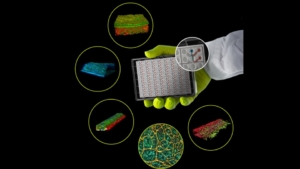
The IHB focuses on so-called human model systems, particularly organoids—lab-grown mini-organs that replicate key functions of human tissues. These are complemented by organ-on-chip technologies and computational models. The aim is to simulate disease processes more realistically and to better predict the effects of new therapies at an early stage.
This approach is also intended to reduce reliance on animal testing, which regulators such as the U.S. Food and Drug Administration no longer regard as fundamentally sufficient on its own to model human biology at the level achievable with validated organoid systems. At the same time, it addresses ongoing concerns about the continued high number of laboratory animals used in medical research.
By combining such systems with data-driven approaches, Roche aims to accelerate and streamline drug development. Up to 250 scientists are expected to work in the new facility, which emphasises interdisciplinary collaboration between basic research and industrial development.
Innovation from academia and start-ups
With the expansion of the IHB, Roche is tapping into a trend that is gaining traction across the industry: organoids and related technologies could, over time, improve success rates in clinical development while reducing costs—for example, by lowering failure rates in later-stage trials.
At present, the centre’s partner institutions are mainly academic organisations in Switzerland. It remains to be seen how this network will evolve. Will the many European start-ups working on organoid and lab-on-chip systems gain stronger access, having often encountered a cautious stance from pharmaceutical companies so far?
Even the FDA’s new direction has not met with universal approval in scientific and industrial circles. In private discussions, some still express scepticism, dismissing such approaches as “fashionable novelties” and insisting that animal testing will always be necessary. Greater research efforts, stronger backing from major companies and targeted funding programmes could, however, shift this perspective.
 Mimetas BV
 FDA
FDA