 Novartis Group
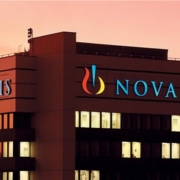
Novartis is back on the acquisition trail, agreeing to buy California-based Excellergy for up to $2bn. The antibody Exl-111 is intended to strengthen its allergy pipeline and go beyond the current standard of care. The deal is part of a broader string of acquisitions aimed at systematically expanding the group’s innovation base.
 Ethris GmbH
The COVID 19 pandemic demonstrated that Europe can move fast, take risk, and deliver world class vaccines when political will, science and capital are aligned. Treating vaccines as strategic assets, backed by sustained political and financial support, will be key to maintaining Europe’s long-term investment in public health and innovation.
 Kelli McClintock auf Unsplash
Ten young European biotechs are heading into 2026 with the kind of momentum that can quickly turn promising science into defining data: first clinical entries, platform-to-pipeline transitions, and funding rounds large enough to accelerate execution. Some are pushing new modalities into hard disease areas, while others are compressing discovery timelines and expanding what’s druggable. What they all share is a clear momentum that makes them especially worth following this year.
 Ysios Capital
Spanish VC firm Ysios Capital has unveiled InceptionBio, a €100 million fund dedicated to boosting Spanish biotech innovation. The initiative targets company creation from top-tier research, backed by public-private partnerships.
 3PBiovian
Europe continues to play a pivotal role in the global biologics landscape, combining scientific excellence, regulatory maturity and a strong industrial foundation.
 123rf.com/Paul Grecaud
The European Investment Fund has launched a new fund of funds with a target volume of €15 billion to strengthen growth financing in Europe’s technology sector. The programme is considered the largest of its kind in Europe to date and is aimed at around 100 late-stage venture capital funds.
 Unsplash+
Finnish clinical stage biotech TenBoron Oy has landed a €7.6m grant from the European Union’s Horizon Europe Health 2025 programme. The funding will propel its boron carrier platform for a novel targeted radiotherapy into larger clinical trials for cancers with few remaining treatment options.
 Unsplash+
Immutrin, a UK biotech, has raised £65m (€75m) in Series A funding for a pioneering antibody designed to remove pre-existing amyloid deposits in amyloidosis.
 Roche
RocheAnimal testing or organoids—this question is increasingly being answered in favour of organoids. Yet robust model systems still require further research and, crucially, validation. More large pharmaceutical companies are now pursuing this goal, whether by acquiring relevant start-ups or by establishing their own research centres, as Roche has just done in Basel.
 Picture by Joanna Kosinska via Unsplash
Sanofi is expanding its immunology toolbox: The French pharma pays up to US$1.2bn for worldwide exclusive rights to Kali Therapeutics’ next-generation tri-specific T-cell engager targeting B cell-mediated autoimmune diseases.