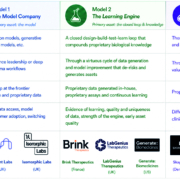

For decades, biotech companies were formed around a discovery: a promising biological signal, a novel target, a platform emerging from academic research. Now a different formation model is gaining momentum: venture studios. These entities don’t just fund startups, they assemble them, testing hypotheses, building teams and infrastructure, and only then spinning out companies designed to scale.
ADVERTISEMENT
Twelve emerging life science startups to showcase enabling technologies at the SLAS European Conference and Exhibition in Vienna, 19-21 May 2026
For years, Portugal sat just outside Europe’s main biotech conversation: scientifically credible, strong in research, but too small, too fragmented and too thinly financed to compete with the established hubs in Switzerland, the UK, France, Germany or the Nordics. That view is becoming harder to defend. Portugal still does not have the scale of Europe’s top biotech markets, but it is building something more durable than a collection of isolated startups.
Ten young European biotechs are heading into 2026 with the kind of momentum that can quickly turn promising science into defining data: first clinical entries, platform-to-pipeline transitions, and funding rounds large enough to accelerate execution. Some are pushing new modalities into hard disease areas, while others are compressing discovery timelines and expanding what’s druggable. What they all share is a clear momentum that makes them especially worth following this year.
As advanced therapeutic medicinal products (ATMPs) and other next-generation biologics move toward approval, Chemistry, Manufacturing and Controls (CMC) continues to be the most frequent source of regulatory concern. This article highlights recurring CMC barriers and best practices to mitigate approval delays or refusals.
The Unified Patent Court and the unitary patent were established to make patent litigation in Europe easier, faster and more affordable. It has been particularly emphasized that the new system was designed to enable small and medium-sized enterprises to enforce their rights more effectively and rapidly. The reality now suggests differently. Litigation in Europe has become quite fragmented, more complex and more expensive than ever – a nice playground for deep pockets.
With the promise of transformative treatments, cell therapies are rising across oncology, regenerative medicine, and stem cell applications. PL BioScience supports this evolution with Human Platelet Lysate (HPL) and soon, the first artificial HPL, while expanding production in Aachen to continue to deliver this high-quality cell culture supplement worldwide.
One year after the inauguration of Bayer Co.Lab — the open workspace for start-ups in Berlin — it is time to take stock. European Biotechnology News Magazine
spoke with tenants and with Dr Ruth Shah, Head of Bayer Co.Lab Berlin, about the concept, the offering, and the feedback Bayer has received so far.
Antibody-drug conjugates (ADCs) hinge on the antibody, not merely the payload or linker. Antibody precision defines efficacy, safety and therapeutic window. Emerging antibody formats – bispecifics, conditional designs and TCR-mimics – expand target space, demanding rigorous engineering to realise next-generation ADC potential.
Earlier guidelines such as ICH Q2(R1) and USP <1224>, <1225>, and <1226> viewed analytical method validation as a discrete activity focused primarily on chromatographic procedures. With ICH Q14, ICH Q2(R2), and USP <1220>, a life-cycle approach now considers variability and improves reliability, supported by tools like DoE, multivariate statistics, and digital technologies enabling Quality by Design and risk-based systems.


www.istockphoto.com/Yuri
SLAS
VanessaSpencer - stock.adobe.com
Kelli McClintock auf Unsplash
Cencora
Boehmert & Boehmert
Alexander Sievert Photography
Bayer Co.Lab
Yumab GmbH
Concept Heidelberg GmbH