

 adobe.stock.com - Cathy
A month after China publicly revealed its bioeconomy priorities under its 15th Five Year Plan, the European Commission released an updated EU Bioeconomy Strategy — and the contrast could hardly be sharper. While China bets on a bold mix of AI, bioengineering and synthetic biology to replace fossil based industrial products with recombinant and cell free systems, the EU remains anchored in a more traditional vision focused on the valorisation of agricultural output and industrial waste. By contrast, the UK has taken a more modern approach, heavily investing in engineering biology — the use of reprogrammed microorganisms to produce industrial goods — as a key pillar of its biotech and bioeconomy strategy.
Tag Archive for: SynBio
 Lift Biosciences Ltd
LIfT BioSciences Ltd, active in London, Galway and Houston, has been awarded a grant of €12m from the Disruptive Technologies Innovation Fund (DTIF) to support the clinical translation of its Immuno-Modulatory Alpha Neutrophils (IMANs). This funding will enable the preparation of the world’s first allogeneic therapy using synthetically programmed neutrophil granulocytes for Phase I trials.
 AmphiStar BV
Waste based biosurfactants producer Amphistar BV has closed a €6m funding round led by the European Circular Bioeconomy Fund (ECBF), Qbic III and Flanders Future Tech Fund (FFTF).

At a recent event researcher and founder of Bit.bio, Prof. Mark Kotter, Babraham Research Campus in Cambridge/UK, was asked what healthcare looks like in 2050. He gave a twofold answer, that it will be driven by data, but also will be personalised. Mark Kotter elaborates here in more detail what is needed to unlock a healthcare of tomorrow.
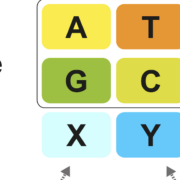
German researchers for the first time have expanded the half life of oligonucleotide-based drugs using artificial building blocks that mimic the features of RNA/DNA but are not digestible by enzymes.
Belfast-based techbio company AMPLY Discovery Ltd announced today will make use of a £1.4m in grant funding to advance its AI-based drug discovery platform.
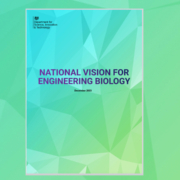
On the occasion of SynbiTECH in London, British Science, Research and Innovation Minister, Andrew Griffith, unveiled a £2bn strategic 10-year plan to foster engineering biology.
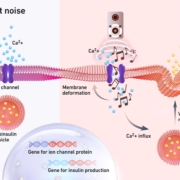
ETH Zurich researchers have developed a gene switch that triggers insulin release in designer cells by playing music.