
2026: A year of reckoning for BioNTech
For BioNTech, 2026 could become one of the most decisive years since its pandemic-driven breakthrough. The pipeline is broad, the coffers are well stocked, partnerships are numerous, and the outlook extends far beyond 2030. Yet despite all the strategic preparation, one key question will be answered in the coming months: can the clinical data live up to the high expectations surrounding BioNTech’s cancer strategy?
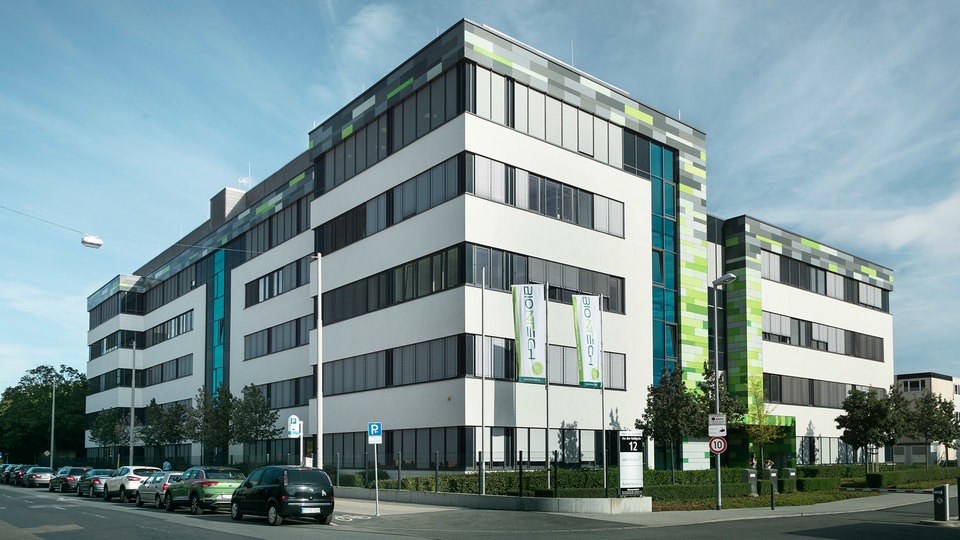
The Mainz-based company’s focus is clearly on oncology. CEO Ugur Sahin will deliver a comprehensive presentation on the current status of the pipeline at the ongoing JPMorgan Conference in San Francisco. As has emerged in advance, he will outline how, over recent years, BioNTech has deliberately aligned its development strategy with common tumour types such as breast and lung cancer – indications affecting hundreds of thousands of patients in the G7 countries alone and still associated with substantial unmet medical need. At the same time, BioNTech is building expertise and commercial infrastructure for selected tumour entities in order to be prepared not only scientifically but also operationally in the event of success. Because in 2026, data from several late-stage clinical programmes will show whether these many hopeful candidates will ultimately reach patients.
Late-stage clinical data move into focus
A total of seven planned data read-outs feature on the calendar and in the JPM presentation. Five of them are considered potentially approval-relevant. These involve pre-defined analyses of efficacy and safety that will determine whether programmes progress towards approval or need to be reassessed.
“Positive results from these clinical studies could open the door to several short- and mid-term product launches,” says CEO Ugur Sahin. Accordingly, the importance of these data points is high – not only for individual projects, but for the credibility of the entire oncology strategy.
Another indicator of the ambitious course is the number of late-stage studies: BioNTech is currently conducting nine Phase III trials in oncology. The start of a further six is planned for 2026. This would bring the total number of ongoing Phase III programmes to 15 by the end of the year. At the beginning of 2025, there were only two Phase III programmes – a dramatic increase closely linked to numerous new partnerships and acquisitions. Compared with industry leader Roche, BioNTech is now almost within sight: the Swiss group currently has 18 advanced Phase III oncology programmes with expected data read-outs this year or next.
Looking back, BioNTech has more than doubled the number of its Phase II and Phase III oncology trials over the past two years. More than 25 studies are currently under way with antibodies, ADCs and mRNA-based cancer immunotherapies, often in combination with other therapeutics. At this scale, the transformation from vaccine specialist to broadly positioned oncology company is no longer in question. The greatest hopes currently rest on the bispecific antibody Pumitamig (BNT327), licensed from China, which is well positioned in the race against Akeso/Summit Therapeutics and Pfizer/3SBio. The combination of checkpoint inhibition and angiogenesis inhibition – PD-(L)1 x VEGF – is currently the most heavily financed bet in oncology, with AbbVie also entering the arena through its USD 5.6 billion acquisition of the Chinese company RemeGen.
However, this bispecific antibody developed by Biotheus is not the only horse in BioNTech’s stable. Phase III results are also expected from collaborations with OncoC4 and DualityBio. Even within BioNTech’s own mRNA development, the Phase III data for BNT113 should finally clarify whether the standalone administration of a tumour neoantigen vaccine is sufficiently effective, or whether, in this case, treatment should always be pursued in a combination setting.
Combination therapies as a second pillar
Speaking of combinations: alongside its late-stage programmes, BioNTech continues to place strong emphasis on innovative combination therapies. More than ten early clinical studies are currently under way in which Pumitamig (formerly BNT327) is combined with other immunomodulators, antibody–drug conjugates (ADCs) or mRNA-based cancer immunotherapies. These so-called novel-novel combinations are intended to unlock new therapeutic effects, but naturally also carry additional development risks. Further partnerships in this area are possible and conceivable at any time, as Sahin’s underlying thesis is that an evolving cancer within a patient can never be defeated with a single weapon. One must “keep pace evolutionarily” and be able to respond to the selection of new cancer mutations often triggered by therapy with adapted agents.
Financial base remains exceptionally strong
The financial starting position for the Mainz-based company’s extensive oncology programme remains excellent. At the end of 2025, BioNTech held around €17.2 billion in cash and securities. This has changed little over several years despite high research and development spending. The position continues to be supported by the COVID-19 vaccine business and, more recently, by the strategic partnership with Bristol Myers Squibb. For 2025, BioNTech most recently raised its revenue guidance to €2.6–2.8 billion while simultaneously lowering its cost forecasts.
For 2026, the company expects a moderate decline in Comirnaty revenues, among other things due to changing vaccination recommendations and the increasing shift towards private markets. No revenues from BioNTech’s own oncology products are currently planned for the year. Income from the BMS collaboration, however, is expected to be broadly in line with the previous year, suggesting that some erosion of the large financial cushion is likely.
All in all, BioNTech enters 2026 with a rare combination of capital strength, pipeline breadth and partner network. But however solid the starting position may be, the decisive factor will be whether the forthcoming clinical data fulfil the scientific promise. For BioNTech, 2026 is therefore less a year of announcements than one in which a grand vision – the broad-based fight against cancer – must be backed up by clinical proof.
 Tubulis GmbH
 EyEM, Freepik.com
 adobe stock photos - Michael Derrer Fuchs