

AI: Breaking barriers in CNS research
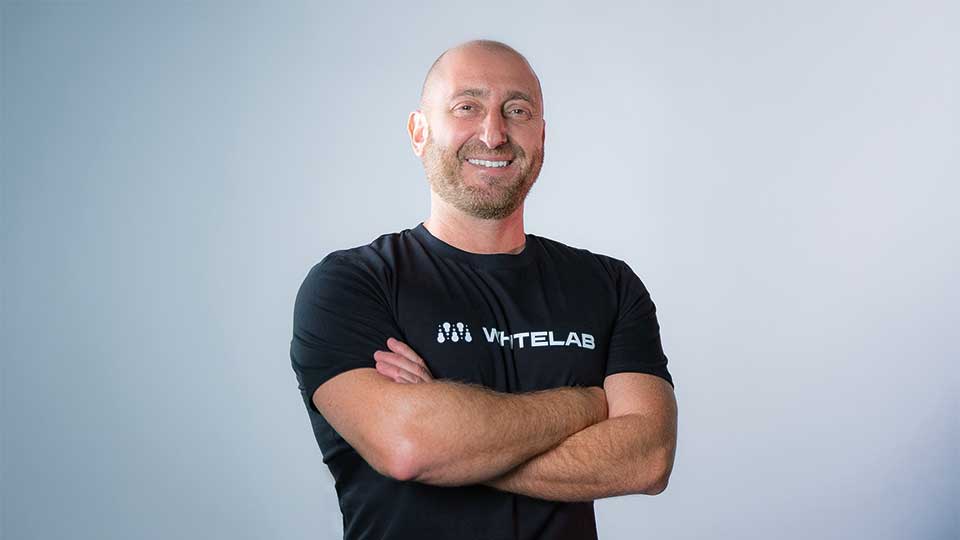
Delivering therapeutic genetic material safely to the correct target in the body is one of the big challenges of modern medicine. We talked to David Del Bourgo, CEO of WhiteLab Genomics, about how AI is helping design a new generation of vectors to tackle neurological diseases.
EuroBiotech_Tell us about the technology, how it was developed and how it works?
David Del Bourgo_The way we change drug design, in my view, is by engineering drug design. Historically, drug development has relied on trial and error, screening compounds and go from hits to leads and get to the final drug that will be approved. You start with screening and eventually arrive at a qualified candidate that goes through clinical trials. To develop a powerful genomic medicine, we identify a receptor that is unique to the target cell type. It also has to be expressed on the cell surface. WhiteLab has a unique map that is able to identify targets that are specific to the cell, based on human data. Eventually, the drug is going to be tested in humans but we identify a unique receptor and ensure cross conservation among species. We have an algorithm that analyses whether receptors are conserved in other animal models – you want to ensure that the vector can first be tested in mice, then primates. Another AI layer works at atomic resolution, we are going to match ligands to the receptor. We have existing ligands and peptides, and a predictive binding model to score how well they bind to their target. This is using deep learning generative models, we have large network able to mimic the behaviour of a Graph Neural Network. We are using GPUs from NVIDIA to develop it and run it.
EuroBiotech_What does the AI-designed vector look like?
Del Bourgo_When we have identified a target receptor, then the next step is how we attach the ligand to the vector. When you insert the peptides into a vector you can potentially destroy it. You need to ensure it is functional. By predicting stability and viability in silico, we select which new sequences to insert into the vector, achieving greater specificity and targeting. However, we retain its capacity to be produced. We are working with viral and non viral vectors, including the AAVs [adeno-associated viruses] used in gene therapy. We don’t create from scratch, we insert and modify the sequence inside the vectors.
EuroBiotech_What progress have you made?
Del Bourgo_Our first project is focusing on CNS. The challenge in this area is to have a systemic injection that reaches brain cells. No one wants to open the skull to inject them. For that you need to cross the blood brain barrier. We have designed a new vector 50 times better than AAV9 used typically in CNS. Another amazing result is, liver signal is undetectable, that’s 1,000 times less compared with other profiles. The goal of AI in drug design is to be faster than traditional methods. In one iteration, from 15,000 candidates we generated 600 leads, which is about 4%. It’s a huge hit rate. Right now, our capsid has great performance and we are talking to several pharma partners. Research-wise, next will be an in vivo study in a large animal.
David Del Bourgo is the CEO and co-founder of WhiteLab Genomics, a TechBio company pioneering AI-guided design for genomic medicine. WhiteLab partners with leading biotech and pharmaceutical companies to accelerate and de-risk genomic medicine development. Prior to founding WhiteLab, David held international leadership roles across genomic technologies, healthcare, and industrial technology, including at GE Healthcare, where he led cross-functional teams in business operations and commercialization. He holds an MBA from Chicago Booth and a Master’s in Biomedical Engineering from UTC Compiègne.
This Interview was originally published in European Biotechnology Magazine Summer 2026.

 bioRN Life Science Cluster