

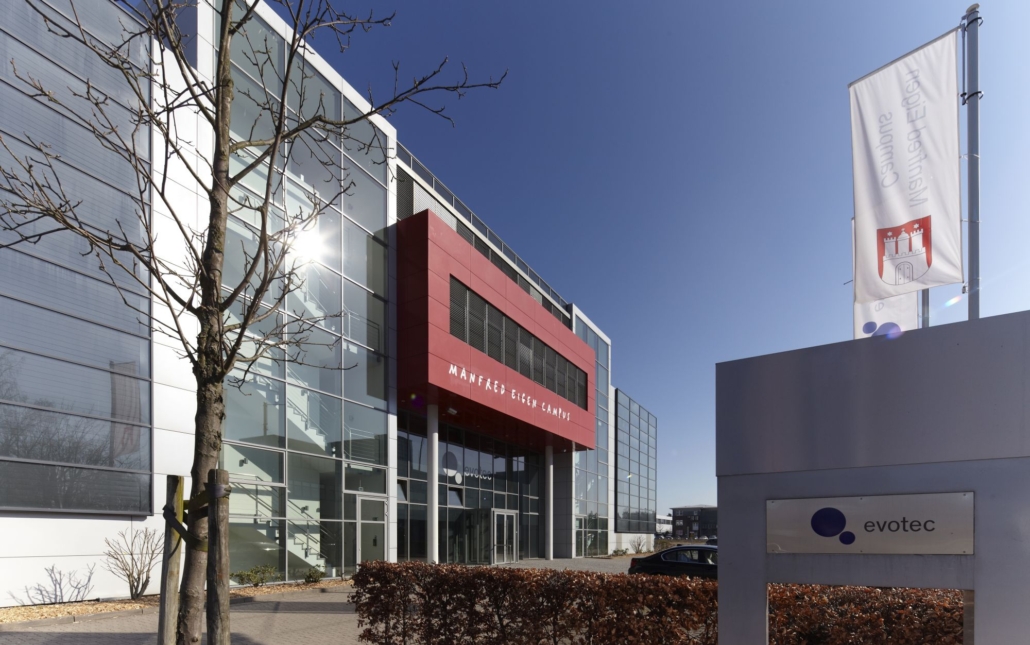
Evotec benefits from Dark Blue acquisition by Amgen
The acquisition of Oxford-based Dark Blue Therapeutics by US biotechnology company Amgen Inc. has produced a German beneficiary: Hamburg-based Evotec SE. Through an early collaboration with the Oxford scientists, Evotec secured an equity stake and will now participate in the proceeds of the transaction.
The acquisition of Oxford-based Dark Blue Therapeutics by US biotechnology company Amgen Inc. has produced a German beneficiary: Hamburg-based Evotec SE. Through an early collaboration with the Oxford scientists, Evotec secured an equity stake and will now participate in the proceeds of the transaction, which carries a potential value of up to US$840 million as published earlier on this site.
The transaction involves more than a single drug candidate. Dark Blue specialises in the targeted modulation of transcriptional regulators that have historically been difficult, if not impossible, to address with conventional small-molecule approaches. Its most advanced programme, DBT-3757, is in preclinical development and targets acute myeloid and acute lymphoblastic leukaemias. It is considered a potential first-in-class approach.
Incubation alongside Evotec
Evotec has been closely involved in the development and expansion of Dark Blue’s technology platform. Around seven years ago, the company launched a strategy aimed at supporting more industry-oriented drug discovery at leading academic centres. This model, branded BRIDGE, was first implemented in Oxford as an initial “translation bridge” between academia and industry.
BRIDGE (Biomedical Research, Innovation & Development Generation Efficiency) is an integrated funding and participation framework designed to accelerate the translation of early-stage academic drug discovery into pharmaceutical development. At its core are pre-seed partnerships that advance academic projects from a therapeutic concept to robust, investable data points. In addition to scientific expertise in drug discovery, BRIDGE provides access to proprietary technology platforms and matched funding.
The BRIDGE model comprises two approaches: strategic partnerships and start-up studios. Both are intended to accelerate spin-outs and licensing opportunities. Key objectives include early validation of first- or best-in-class therapeutic concepts, improving the reproducibility of academic research data, supporting universities in building sustainable start-ups, and significantly shortening timelines from idea to preclinical proof of concept and follow-on financing. Today, BRIDGE partnerships span three continents and involve more than 40 leading academic institutions, including Heidelberg in Germany, alongside a diverse investor base ranging from pharmaceutical companies and venture capital funds to public-sector organisations.
Sharing in the success
According to company sources, Evotec holds an equity stake of around 20% as a result of its early involvement with Dark Blue. This stake will now be monetised proportionally through the upfront payment as well as potential future milestone payments linked to development progress. Evotec has therefore welcomed the transaction.
“Evotec welcomes Amgen’s acquisition of Dark Blue Therapeutics – a company that originally emerged as a pre-seed project within LAB282, the first collaboration in Evotec’s Academic BRIDGE portfolio,” company spokesperson Dr Sarah Fakih told the editorial staff on request. “In line with our shareholding, we have received a portion of the fixed upfront payment and see potential additional upside linked to the achievement of defined development milestones.”
For Evotec, the deal provides tangible validation of the strategy conceived by Werner Lanthaler, Cord Dohrmann and Thomas Hanke, which focuses on close proximity to leading scientific hubs. “We are very proud to have supported Dark Blue Therapeutics at an early stage under the Academic BRIDGE model, and we see the acquisition by Amgen as strong confirmation of Dark Blue Therapeutics’ scientific expertise and significant potential,” Fakih added.
 MAES-AREA-Englos
 Paris Bilal via Unsplash+