
Genmab’s rinatabart sesutecan (Rina-S) delivered durable responses in a Phase 2 trial in platinum-resistant ovarian cancer, providing encouraging validation for the centerpiece of its $1.8 billion acquisition of ProfoundBio.


Genmab’s rinatabart sesutecan (Rina-S) delivered durable responses in a Phase 2 trial in platinum-resistant ovarian cancer, providing encouraging validation for the centerpiece of its $1.8 billion acquisition of ProfoundBio.

Justyna Adamczyk, Associate VP Integrated MS&T at Rezon Bio, discusses why integrating development and manufacturing strategies is key to improving late-stage efficiency and commercialization readiness.

Customized Enzymes and Reagents from New England Biolabs. Creating the right partnership is essential when pioneering a new life science product.

Novartis is paying China’s Abogen Biosciences $575 million (€512 million) upfront for global rights to ABO2203, an experimental treatment that uses mRNA to make a B-cell-depleting drug inside the patient’s body.
Every Friday, The Leadership Edit follows people taking new roles across European biotech and what their moves may tell us about the companies they join. This week: an immediate CEO change at Pharming, a scientific leadership vacancy at Evotec and a new finance chief at Nanobiotix.

Amsterdam-based Amplio Pharma has reported early clinical evidence that its experimental treatment NovoBioJect boosts the active form of methotrexate inside immune cells. The company is seeking about €10 million to test whether the approach improves disease control in rheumatoid arthritis.

GSK has selected a liver disease drug candidate from its collaboration with Wave Life Sciences for further development, triggering a $12 million (€11 million) milestone payment to the U.S.-based biotech.

Spain’s Highlight Therapeutics reported that its lead candidate, BO-112, met its Phase 2b endpoint in localized basal cell carcinoma, with 61% of evaluable patients achieving a response.
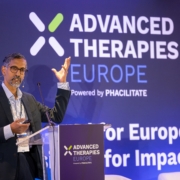
Industry leaders at Advanced Therapies Europe 2026 warned that Europe must tackle barriers across commercialisation, regulation, reimbursement, manufacturing and patient access to retain its global leadership.

Boehringer Ingelheim’s survodutide delivered average weight loss of up to 13.1% in a Phase 3 trial involving people with overweight or obesity and type 2 diabetes, but gastrointestinal side effects caused 18% of patients receiving the drug to stop treatment.