
 adobe.stock.com - Cathy
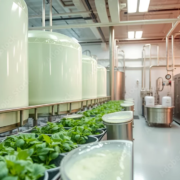
A month after China publicly revealed its bioeconomy priorities under its 15th Five Year Plan, the European Commission released an updated EU Bioeconomy Strategy — and the contrast could hardly be sharper. While China bets on a bold mix of AI, bioengineering and synthetic biology to replace fossil based industrial products with recombinant and cell free systems, the EU remains anchored in a more traditional vision focused on the valorisation of agricultural output and industrial waste. By contrast, the UK has taken a more modern approach, heavily investing in engineering biology — the use of reprogrammed microorganisms to produce industrial goods — as a key pillar of its biotech and bioeconomy strategy.
 Afyren Group
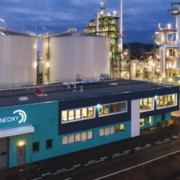
French Afyren secures €23m to accelerate biorefinery expansion as first plant enters full industrial ramp-up. Most of the money comes from US company Kemin Industries.
 freshidea / Adobe Stock
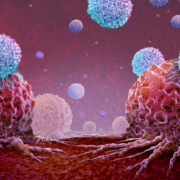
Lyon-based Ventuno Biotech secures fresh backing to accelerate its preclinical pipeline of first-in-class immuno-oncology assets.
 adobe.stock.com - ipopba
Novo Nordisk’s semaglutide has failed to reduce the cognition deficit in two Phase III Alzheimer’s trials, dimming GLP-1 hopes. Anti-amyloid and combination therapies remain key for slowing decline.
 Gilead Science
Sprint Bioscience AB has sold its preclinical TREX1 first-in-class cancer program to Gilead for up to US$414m, validating its fragment-driven small-molecule out-licensing business model.
 stock.adobe.photo.com/Popelniushka
 According to a new deal, AGC Biologics wil manufacture AAVantgarde’s dual AAV gene therapies for inherited retinal diseases using the high-yield BravoAAV™ suspension platform.
 stock.adobe.com/Sadushi
 Melatonin shows promise in Alzheimer’s treatment by restoring circadian rhythms and reducing neurodegenerative symptoms, researchers have demonstrated in a groundbreaking study.
 Roche
RocheRoche has reported that its selective estrogen receptor degrader (SERD), giredestrant, has demonstrated significant clinical benefit in pivotal Phase III trials for adjuvant early-stage ER-positive, HER2-negative breast cancer, as well as strong efficacy in advanced breast cancer settings. These results position giredestrant as the first oral SERD to show meaningful clinical benefit in this indication. The announcement sparked a notable 7% jump in Roche’s share price in a single day.
 adobe.stock.photos - Yurii Kibalnik
 Dutch Avanzanite Biosciences NV has secured €32 m in a Series A financing round from MVM Partners to scale orphan drug commercialisation across Europe.
 Biocom interrelations GmbH
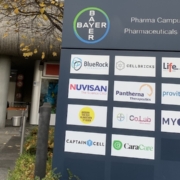
The company Captain T Cell, spin-out from Max-Delbrück center in Berlin, now has a total of €20 million in funding and grants to push forward its novel cell therapies for solid tumours. New backers include Springboard Health Angels, Pluton Asset Holding, Sintra Limited and the Technologiegründerfonds Sachsen, joining the existing investor base. The new tennant in Bayer´s Co.Lab in Berlin City does starts with positive vibes.