
Swedish kiss for french Innate: Sobi backs Innate’s lacutamab as rare T-cell lymphoma program enters Phase 3
Swedish rare-disease specialist Sobi is paying $75 million upfront for global commercial rights to Innate Pharma’s lacutamab, a first-in-class antibody targeting KIR3DL2 in cutaneous T-cell lymphoma. The deal gives Innate funding and a commercial partner for its next clinical step, while adding a late-stage oncology asset to Sobi’s rare-disease portfolio.
Sobi is expanding its rare-disease portfolio into cutaneous T-cell lymphoma (CTCL), signing a strategic partnership with French biotech Innate Pharma around lacutamab. The agreement comes at a critical point: Innate is preparing to start the pivotal Phase 3 TELLOMAK-3 study, which is intended to support a potential accelerated approval in Sézary syndrome, an aggressive form of CTCL.
Under the agreement, Sobi will pay $75 million upfront and Innate is eligible for up to a further $40 million in near-term development milestones. A further $465 million could be triggered by Sobi’s option to take on full development rights as well as regulatory and commercial milestones. Innate will also receive tiered double-digit royalties on net sales. Closing remains subject to customary conditions, including antitrust clearance.
For Innate, the deal provides a substantial non-dilutive source of funding at the point where development costs are about to rise significantly. The company will continue to run TELLOMAK-3, while Sobi will receive exclusive global commercialization rights if lacutamab gains potential accelerated approval. If the Phase 3 program is successful, Sobi can assume full global development rights.
Why the deal matters
The transaction is interesting because lacutamab is not a discovery-stage bet. Innate is taking an asset with clinical proof-of-concept toward a registrational study, while Sobi is bringing in the commercial infrastructure needed to potentially reach patients worldwide.
That fits Sobi’s current strategy. The Swedish company has increasingly focused on mid- and late-stage opportunities addressing serious rare diseases with significant unmet need, using licensing and acquisitions to expand its pipeline. Sobi generated SEK 28 billion in revenue in 2025, with hematology accounting for SEK 19.1 billion and immunology for SEK 7.8 billion. Its stated strategy is to identify promising external innovations, unlock their potential and scale patient access globally.
Lacutamab therefore represents a logical extension rather than a radical departure. CTCL is rare, difficult to treat and dominated by patients who eventually relapse. The most common subtype is mycosis fungoides, while Sézary syndrome is a rarer, aggressive leukemic form. Advanced CTCL remains an area of substantial unmet need: existing treatments can produce responses, but durable remissions remain difficult to achieve.
Sobi was advised by Cooley´s team in London, representing one of the leading advisers to the global life sciences industry.
Targeting KIR3DL2
Lacutamab is a humanized monoclonal antibody designed to target KIR3DL2, a receptor expressed at high levels on malignant T cells in many patients with Sézary syndrome and some other CTCLs. By binding to KIR3DL2, the antibody is designed to trigger immune-mediated killing of the malignant cells.
That makes the approach different from established CTCL therapies such as mogamulizumab, which targets CCR4, or brentuximab vedotin, an antibody-drug conjugate directed against CD30. These therapies have improved treatment options for advanced CTCL, but patients frequently relapse and there remains a need for new targeted approaches.
Lacutamab has already accumulated a substantial regulatory pedigree: the program has received FDA Fast Track and Breakthrough Therapy designations, EMA PRIME designation for Sézary syndrome, and orphan-drug designation in both the U.S. and EU.
The previous TELLOMAK Phase 2 program provided the clinical basis for moving forward. The study evaluated lacutamab in heavily pretreated patients with relapsed or refractory Sézary syndrome and was designed around the drug’s ability to target KIR3DL2-expressing malignant cells.
One Phase 3, two ambitions
TELLOMAK-3 is designed to address two related regulatory objectives. A confirmatory cohort in Sézary syndrome is intended to support a potential accelerated approval, while a separate registrational cohort in mycosis fungoides is intended to support a full approval.
The trial will enroll patients with Sézary syndrome or mycosis fungoides who have failed at least one prior systemic therapy. Progression-free survival is the primary endpoint.
That design could ultimately give lacutamab a broader role across CTCL rather than limiting the opportunity to the much smaller Sézary syndrome population. Mycosis fungoides is the most common CTCL subtype, although CTCL itself represents only a small fraction of non-Hodgkin lymphomas.
A commercial fit for Sobi
For Sobi, the attraction is therefore not simply another oncology drug. It is an opportunity to apply an established rare-disease commercial platform to a highly specialized hematologic malignancy.
Sobi already operates across hematology, immunology and specialty care and has a global footprint of around 2,000 employees. Its hematology business is its largest therapeutic area, generating SEK 19.1 billion in 2025.
The lacutamab deal also illustrates how Sobi is trying to build future growth through external innovation. Rather than taking on the full cost and scientific risk of discovering and developing a new molecule, Sobi is stepping in when the biological concept has already generated clinical evidence and the next value inflection point is a pivotal trial and, potentially, regulatory approval.
For Innate, meanwhile, the partnership provides exactly what is needed for that next step: capital, global commercial reach and a partner experienced in rare diseases. The French biotech retains responsibility for the Phase 3 study, while Sobi gains a route to commercialization if the program succeeds.
The critical question now is whether the Phase 2 signal can translate into a registrational benefit in a disease where treatment options have improved but durable disease control remains difficult. If it does, Sobi will have secured a potentially differentiated rare-cancer therapy at the point where lacutamab moves from an innovative clinical program toward a commercial product.
CEO on the leave
Sobi´s CEO Oelkers, who was a driving force behind many of those deals over the last years, has attracted the head hunting machinery. He will move to Mainz in Germany until February next year to take the helm at BioNTech. Oelkers’ mark on Sobi is the conversion of a Europe-centered specialty company into a global buyer, licensor and commercializer of rare disease medicines. BioNTech is now betting that he can apply the same company-building skills on a much larger stage.
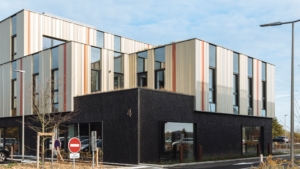 MAES-AREA-Englos
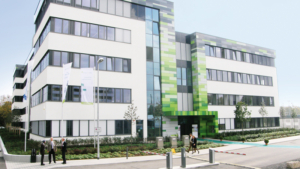 BioNTech SE
 Moderna