
Servier and Insilico sign an $888 million AI oncology discovery deal
On January 4, the French pharma group Servier and the AI drug discovery Insilico Medicine announced a collaboration worth up to $888 million. Insilico will receive up to $32 million from Servier for a multi-year research and development collaboration to discover and develop oncology therapies using Insilico’s artificial intelligence (AI)-driven drug discovery platform and Servier’s cancer development expertise.
The deal follows Insilico’s recent Hong Kong Stock Exchange listing and comes as AI-driven drug discovery continues to attract large pharmaceutical partners despite more cautious investor sentiment.
Into the Insilico-Servier deal
Under the agreement, Insilico will use its Pharma.AI platform to identify and design new oncology drug candidates, while Servier will take responsibility for moving selected programs through development and toward the clinic.
Once candidates are selected, the French pharma will lead preclinical and clinical development, regulatory activities, and global commercialization, while co-funding research during the discovery phase. The agreement covers multiple oncology programs rather than a single asset, a broader effort by Servier to integrate AI-driven discovery into its oncology pipeline.
For Insilico, the Servier collaboration adds to a series of research and licensing agreements Insilico has signed with pharmaceutical and biotech companies. The company has previously entered research or licensing agreements with Eli Lilly, Exelixis, and others, applying its AI tools to different disease areas.
For Servier, oncology remains a core therapeutic focus, with close to 70% of its research and development (R&D) budget being dedicated to cancer, and the company has increasingly looked outside its internal R&D to supplement its pipeline. In 2025, Servier closed a licensing agreement with IDEAYA Biosciences for darovasertib and another one with Black Diamond Therapeutics for BDTX-4933. The Insilico collaboration is a longer-term bet on using AI drug discovery to feed Servier’s oncology pipeline, while keeping clinical development and commercialization in-house.
Where the Insilico-Servier deal sits in the AI-biotech collaboration landscape
In the last few years, several pharma groups have signed multi-program, milestone-heavy collaborations with AI companies, often valued in the hundreds of millions to a few billion dollars on paper.
One of the earlier examples was Bristol Myers Squibb’s 2021 $1.2 billion collaboration with Exscientia, before the latter merged with Recursion. In 2023, a PKC-theta inhibitor discovered through this partnership, EXS4318, entered phase 1 trial, although it has recently been removed from the clinic. Isomorphic Labs also made headlines in 2024 when it signed partnerships with both Eli Lilly and Novartis, with a combined potential value close to $3 billion.
The Insilico-Servier agreement, with up to $888M in total payments and a defined split of responsibilities, looks like another step in the same direction: pharma using AI platforms as an external discovery engine, while keeping later-stage execution in-house.
In the press release, Insilico’s CEO, Alex Zhavoronkov, framed the collaboration as part of a longer-term vision he calls “pharmaceutical superintelligence”, in which AI agents would make decisions and design experiments. However, there are still reasons to keep expectations measured. Even as money and deal sizes have grown, the gap between enthusiasm and approvals still exists. The industry is still watching for the first clear regulatory win from a drug whose discovery leaned heavily on AI.
 EyEM, Freepik.com
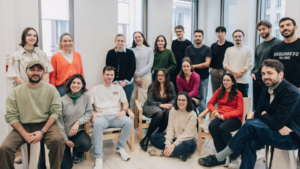 Generare
 adobe stock photos - Michael Derrer Fuchs