
Radioligands give Molecular Partners new momentum in a market already at full speed
The Zurich-based developer is increasingly focusing its pipeline on radiopharmaceutical cancer therapies. A recent development agreement with isotope specialist Eckert & Ziegler marks another step in that direction. The collaboration aims to develop and manufacture so-called Radio-DARPin therapeutics, in which targeted protein molecules deliver radioactive isotopes directly to tumours. Early clinical data on the DARPin molecules in combination with radioisotopes suggest targeted tumour localisation. Proof of efficacy, however, is still pending.
Early clinical data on the DARPin molecules developed by Molecular Partners in combination with radioisotopes suggest targeted tumour localisation. By pivoting towards radioligand therapy, the Swiss biotech has effectively boarded a train that is already moving, but the shift is giving its proprietary technology platform renewed momentum. Proof of efficacy, however, is still pending.
The Zurich-based developer is increasingly focusing its pipeline on radiopharmaceutical cancer therapies. A recent development agreement with isotope specialist Eckert & Ziegler marks another step in that direction. The collaboration aims to develop and manufacture so-called Radio-DARPin therapeutics, in which targeted protein molecules deliver radioactive isotopes directly to tumours.
The partnership will focus particularly on alpha- and beta-emitting isotopes such as Actinium-225 and Lutetium-177. Eckert & Ziegler will contribute its radiochemistry expertise and infrastructure, including its recently established Alpha Laboratory in Berlin. For Molecular Partners, the deal provides access to key development and manufacturing capabilities to accelerate its radiopharmaceutical programmes.
DARPin platform as modular building blocks
Since its founding in 2004, the company has built its strategy around its proprietary DARPin (Designed Ankyrin Repeat Protein) technology. These small, stable binding proteins can be directed precisely at tumour structures and are therefore well suited as carriers for radioactive payloads. Combined with therapeutic isotopes, they are designed to deliver radiation selectively to tumour tissue while sparing healthy organs – an approach currently among the most dynamic areas in oncology.
In recent years, Molecular Partners has begun systematically extending this platform into radioligand therapy. A key programme is the candidate MP0712, which targets the tumour antigen DLL3 and is being developed for the treatment of small-cell lung cancer. A combined phase I/IIa trial has recently been initiated to generate initial safety and efficacy data.
Early data suggest promising tumour targeting
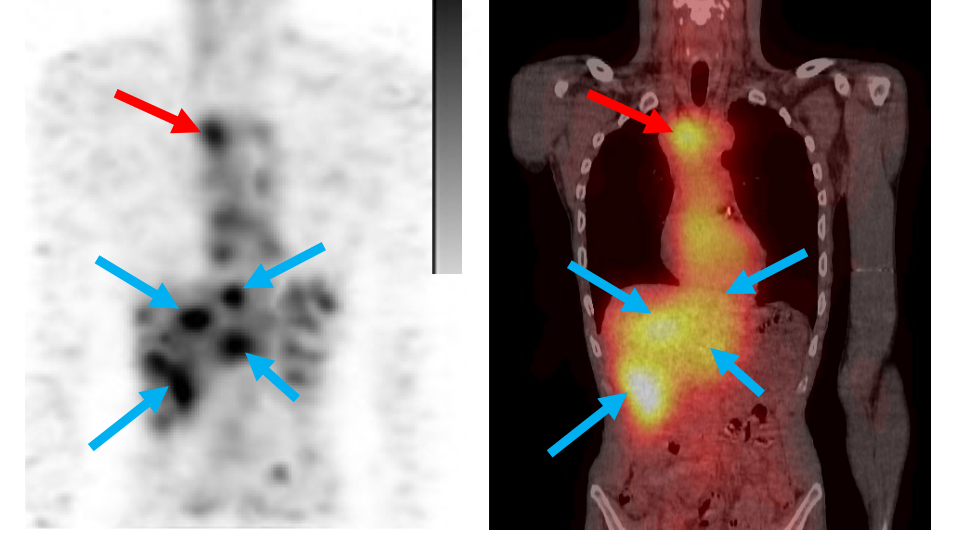
The company recently presented new data on MP0712 at the Targeted Radiopharmaceuticals (TRP) Summit Europe. The first human imaging results, according to the company, support the candidate’s mechanism of action. MP0712 is being developed together with strategic partner Orano Med for patients with small-cell lung cancer and other neuroendocrine tumours.
Images from a diagnostic application in a patient treated under compassionate use at the Nuclear Medicine Research Infrastructure in South Africa show tumour-specific uptake of the DARPin-based tracer.
According to CEO Patrick Amstutz, the images demonstrate targeted accumulation in tumours with limited exposure of healthy organs such as the kidneys and liver. If confirmed, this could support the use of the molecule with the therapeutic radioisotope lead-212 in future clinical studies.
A fast-moving field
At the same time, the company is expanding a broader Radio-DARPin pipeline and is evaluating different radioisotopes to tailor candidates to specific tumour biologies. Preclinical data on several programmes are expected to be presented later this year.
By shifting towards targeted radiotherapy, Molecular Partners is seeking to position its DARPin platform within one of the fastest-growing segments of oncology. Yet the company remains at a very early clinical stage, with only a limited number of patients treated so far.
Meanwhile, the radioligand therapy field has already gathered considerable momentum, with several products approved and many others in late-stage development. Molecular Partners will therefore need to move quickly while also demonstrating that its DARPin format can offer advantages over established antibody-based approaches.
 adobe stock photos - Michael Derrer Fuchs
  Roche
Roche