

French AI: 20 million funding for Generare to find better data in nature
French Generare, founded in 2023, is positioning itself at the intersection of synthetic biology and artificial intelligence by tackling what many in the sector now see as a fundamental bottleneck: the lack of genuinely novel molecular data.
Paris-based techbio company Generare is seeking to reshape the foundations of drug discovery after securing €20m in Series A financing. Generare, founded in 2023, is positioning itself at the intersection of synthetic biology and artificial intelligence by tackling what many in the sector now see as a fundamental bottleneck: the lack of genuinely novel molecular data.
The round was co-led by Alven and Daphni, with participation from existing backers. The proceeds will be used to scale the company’s proprietary dataset of small molecules and expand its platform, with the aim of increasing output tenfold by 2027.
Data, not algorithms, as the constraint
While much of the excitement in AI-driven drug discovery has focused on increasingly sophisticated models, Generare is taking a different approach. Its premise is that current systems are limited not by computational power, but by the narrowness of the chemical data they are trained on.
The company’s platform decodes microbial genomes to uncover previously inaccessible “cryptic” chemistry—small molecules shaped by billions of years of evolution. Using high-throughput cloning, sequencing and expression technologies, Generare identifies gene clusters likely to produce bioactive compounds and characterises them for structure and biological activity.
In 2025 alone, the company says it identified more than 200 novel molecules—outpacing the rest of the field combined. These compounds are already being explored by research partners as potential starting points for new therapeutics.
Positioning in a crowded techbio landscape
Generare’s strategy reflects a broader shift within the European techbio ecosystem. Companies such as british Exscientia, BenevolentAI (once with millions in the tank) and french Owkin have built their platforms around machine learning models applied to existing biomedical data. Others, including Recursion Pharmaceuticals (wich has aquired Exscientia in 2024), are generating large-scale phenotypic datasets to feed AI systems. Of the companies mentioned above, quite a number have run into significant turbulence (Benevolent AI nearly to extinction; Recursion with dramatic loss of investors like Nvidia and Novo and tumbling since), with only Owkin holding up relatively well by also resetting the strategy with the spin-out of AI-diagnostics unit Waiv in an extra financing gift of €30m.
Generare, by contrast, is focused on expanding the underlying chemical universe itself. Its emphasis on evolution-derived molecules—particularly small molecules, which underpin many established drugs—offers a complementary approach to AI-first players. In effect, it aims to supply the “fuel” for the next generation of algorithms. This positioning has begun to attract attention from pharmaceutical and agrochemical companies, which are increasingly seeking access to differentiated datasets as a competitive advantage.
Europe’s evolving role in AI-driven drug discovery
Across Europe, the convergence of biology, computation and engineering is accelerating. Venture capital continues to flow into techbio platforms, particularly those combining wet-lab capabilities with scalable data generation. The emergence of specialised datasets—whether genomic, phenotypic or chemical—is becoming a defining feature of the sector.
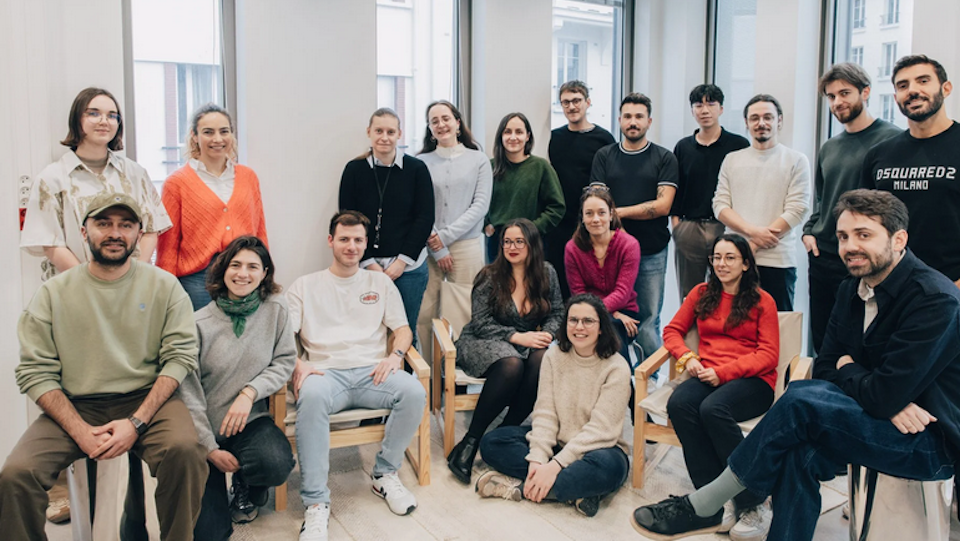
In this context, Generare’s focus on unlocking the vast, largely untapped reservoir of natural products encoded in microbial genomes speaks to a wider industry realisation: artificial intelligence alone is unlikely to deliver breakthroughs without fundamentally new data to learn from. Or, as Dr Vincent Libis, CSO and Co-Founder at Generare said: “Nature has been the n°1 source of innovative modes of action for drugs and we’ve only scratched the surface of its potential. We’re building the infrastructure to change that with the largest commercial library of evolution-derived molecules in the world, a dataset that improves with every cycle, and a platform that can supply companies with genuinely new starting points for drug discovery.” (on the foto second from right in second row)
Drugs from nature´s origin an evolution
The mantra of Generare claims, that more than 500 FDA-approved drugs originate from microbial chemistry. Penicillin, rapamycin, vancomycin – all evolution-derived. Still 97% of microbial chemistry has never been expressed, observed, or screened. Because the technology did not exist to do it in scale.
With fresh funding in place and ambitions to scale its molecular library into the thousands, Generare is betting that the next wave of drug discovery will be driven not just by smarter algorithms, but by access to biology that has, until now, remained out of reach.
 adobe stock photos - Sundry Photography
  ABA Austria