
Boehringer steps back from MASH programm as OSE restructure its pipeline
French biotech OSE Immunotherapeutics is narrowing its ambitions to just two late-stage programs after a one–two hit: AbbVie backing away from an inflammation partnership and Boehringer Ingelheim halting the liver-disease leg of a separate collaboration following a mid-stage failure. The company now says it will concentrate resources on its cancer vaccine Tedopi and its IL-7 receptor antibody lusvertikimab, while pausing or ending several earlier-stage efforts to conserve cash and push toward near-term clinical catalysts.
Boehringer steps back in MASH after Phase II miss but oncology work continues
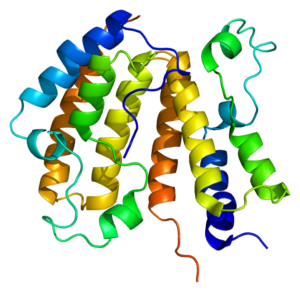
The latest trigger was a setback for BI 770371, an anti-SIRPα antibody partnered with Boehringer Ingelheim. OSE disclosed that the drug failed to show efficacy in an exploratory Phase II study in MASH (metabolic dysfunction–associated steatohepatitis) and that Boehringer will discontinue the liver/cirrhosis program. Importantly for OSE, the companies say the oncology program is not affected: BI 770371 continues in cancer studies as a monotherapy and in combination with a PD-1 inhibitor, including work in advanced solid tumors and head and neck squamous cell carcinoma.
The partnership itself has evolved over time. The firms first teamed up in 2018 in oncology, and the collaboration was expanded in 2024, with OSE receiving a one-time “partial royalty buy-out” payment of €25.3 million tied to the expansion into cardiovascular-renal-metabolic diseases.
AbbVie deal revised, then effectively frozen as OSE pauses OSE-230
OSE’s other major partner reset came from AbbVie. Under a 2024 agreement, AbbVie paid $48 million upfront for global rights to OSE-230, a monoclonal antibody designed to activate ChemR23 and modulate innate immune cells. But by December 2025, the companies amended the deal so that OSE resumed responsibility for preclinical work and Phase I, with OSE noting that this next step would depend on securing adequate funding. Now, OSE is pausing development of the asset altogether, a decision that effectively acknowledges the financing strain of advancing another program alongside its lead pair.
Pipeline whittling: CLEC-1 research ends, “non-core” programs shelved
Beyond OSE-230, OSE is also ending research activities tied to a CLEC-1 myeloid-checkpoint program in oncology, saying it doesn’t fit the company’s “immediate clinical or partnership priorities.” The company has framed the wider portfolio cuts as a way to avoid spending on programs unlikely to generate meaningful value inflection within its current planning window.
The new center of gravity: Tedopi + lusvertikimab
With those programs paused or dropped, OSE is making a cleaner, simpler pitch to investors: it is now “all in” on two baskets.
First, Tedopi is being studied across multiple tumor types. The company is running a Phase III NSCLC trial called ARTEMIA in patients resistant to immune checkpoint inhibitors, with completion estimated for December 2028. OSE is also awaiting a Phase II ovarian cancer readout from an investigator-led study in Q2 2026.
On the other hand, lusvertikimab (also referenced as OSE-127) is being advanced in ulcerative colitis in both IV and subcutaneous formulations, and OSE has also pointed to potential expansion into chronic pouchitis and hidradenitis suppurativa, arguing the IL-7 receptor plays a strong role in both diseases. Additionally, the drug recently met its endpoints in a Phase 2a study in ulcerative colitis, with the company targeting a later-stage study start in the coming years.
Keeping the runway intact
With this news, OSE’s message is consistent: stepping away from early-stage work should concentrate cash and talent on programs with nearer-term clinical catalysts, while also keeping optionality open for partnerships or financing to fully fund late-stage development. CEO Marc Le Bozec summarized the logic as a “disciplined evolution” of the portfolio designed to focus resources where the company can “create the greatest value in the near term.”