BioNTech founders in talks to raise $1B for mRNA cancer startup Arife
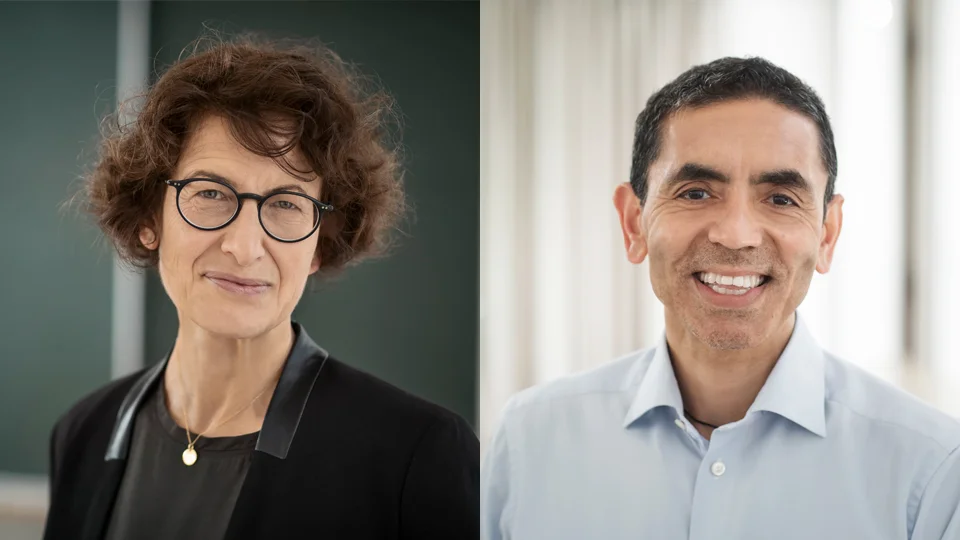
After announcing that they would step down from their leadership roles at BioNTech, the company’s founders want to start from scratch again, this time with an unusually large amount of capital. The Financial Times (FT) reports that Uğur Şahin and Özlem Türeci are in talks with potential investors about a roughly $1 billion funding round for their new company, Arife. European venture capital firm Plural is reportedly leading the talks.
According to the newspaper, the financing package would include a seed round that would value Arife at around $2.5 billion, along with debt instruments that could convert into equity in a subsequent funding round. BioNTech and Arife both declined to comment to the FT on the talks. Plural also declined to comment.
Back to the beginning: Arife is returning to the idea behind BioNTech’s founding, the development of mRNA-based cancer therapies. The technology that brought Şahin and Türeci worldwide recognition during the COVID-19 pandemic will now be developed further for new therapeutic approaches in oncology. In particular, Arife aims to use mRNA technology beyond established vaccine approaches and find new ways to treat cancer.
The FT describes a strategic division between the two companies. Arife is expected to focus more on early-stage research, while BioNTech will advance promising drug candidates until they are ready for market. This could allow the two companies to divide the work between basic research and later-stage clinical development, although the details remain open.
In March, the two founders announced that they would leave BioNTech at the end of the year to pursue a new venture. Şahin said at the time that they were both ready to do pioneering work again and unlock the next generation of transformative innovations. After 18 years at BioNTech, the pair are embarking on a new venture.
Shaky tech transfer: How closely the two companies will be linked remains unclear. In March, BioNTech said it intended to provide the startup with relevant rights and mRNA technologies in exchange for a minority stake. BioNTech shareholders have been waiting for some time for more details on the arrangement. On a call to discuss its latest quarterly results, the company said talks about what it might contribute were still ongoing. Any agreement would be optional for both sides, and the new company could proceed without one.
This matters because Arife is expected to build on technologies and findings developed over many years at BioNTech. The scope of the technology transfer and the rights Arife ultimately receives are therefore likely to be crucial to its development. The formation of the new company will also have to account for patent disputes with other mRNA companies. Some are still ongoing, and the dispute with Tübingen-based CureVac was the only one resolved through an acquisition.
Plural’s bet on European innovation: Plural could bring a well-funded European investor on board. According to the FT, the firm raised about €1 billion this year to invest in European startups. Its portfolio includes defense company Helsing, chip developer Olix and fusion energy startup Proxima Fusion. An investment in Arife would be another high-profile bet on a European technology startup.
The financing under discussion would be exceptional. Raising $1 billion at the seed stage and securing a $2.5 billion valuation would put Arife in a league rarely seen among European biotech startups. The plans also suggest that investors are willing to bet substantial sums on the BioNTech founders’ scientific reputation and entrepreneurial track record. The Strüngmann brothers, early investors in BioNTech, have also signaled that they want to back Şahin and Türeci’s new startup.
BioNTech’s new strategy: The new venture comes as BioNTech reshapes its strategy. The company is in a period of transition following its pandemic-driven sales boom. In the first nine months of 2026, its net loss rose 41% from a year earlier to €1.2 billion. With demand for COVID-19 vaccines falling, BioNTech has also shut down much of its vaccine manufacturing network. Its main site in Mainz was the only one to emerge relatively unscathed from the restructuring. Arife plans to set up there as well. At the end of September, BioNTech still held more than €16 billion in cash and cash equivalents, giving it plenty of financial breathing room.
BioNTech now pursues several technological approaches in oncology, including personalized mRNA cancer vaccines and, in particular, bispecific antibodies. One example is pumitamig, a drug candidate that originated at the Chinese company Biotheus and is being developed jointly with Bristol Myers Squibb. BMS signed an agreement with BioNTech worth up to $11 billion. The drug candidate activates the immune system against tumor cells while blocking a signaling pathway important to tumor growth.
Competitors are also making progress. Recent trial data from U.S. rival Moderna have given the development of personalized cancer vaccines fresh momentum. BioNTech and Moderna are pursuing similar ideas and still need to establish which indications and patient groups can support therapies that are clinically and commercially viable over the long term.
Arife could become a second company focused on the next generation of mRNA-based cancer therapies, this time led by the people who built BioNTech. Whether the billion-dollar funding round gives rise to a new heavyweight in European biotech will depend on the capital Arife raises and, above all, on the scientific and technological advances it can make. The sums being discussed show that the married founders still command considerable attention. There may yet be an announcement before Christmas confirming that a deal has gone through.