
Swiss Roche builds its own AI factory with NVIDIA – with Genentech in California
The Basel-based pharmaceutical group Roche is pressing ahead with its digital strategy and setting new benchmarks for the industry. Together with NVIDIA, the company is building an “AI factory” that will become the largest computing infrastructure ever announced by a pharma company. In the race among pharma majors, Roche has now overtaken the supercomputer recently unveiled by Eli Lilly.
The planned AI factory will comprise more than 3,500 high-performance GPUs, making it the most powerful setup of its kind in the sector to date. Only weeks ago, Eli Lilly had presented its own system as a new industry benchmark.
It resembles the constant lead changes at the front of a Formula One championship: the question of who is currently “in the lead” can shift from one race to the next. In a similar vein, pharma companies are vying for pole position in forging the closest partnerships with NVIDIA. For now, Roche has edged ahead of Eli Lilly and can claim that lead.
Computing power and proprietary data environments
At its core, the initiative is about far more than raw computing power. The new infrastructure is intended to embed artificial intelligence across the entire value chain—from drug discovery and clinical development to manufacturing, diagnostics and commercialisation. In early research in particular, Roche is focusing on “lab-in-the-loop” approaches, tightly integrating experimental data with AI models to test hypotheses faster and identify new targets.
This also brings into play something that has long been difficult for outsiders—and even partners—to fully grasp: the vast, proprietary knowledge accumulated through millions of tests and analyses of molecular structures against selected targets. This closely guarded data treasure, including insights from failed hypotheses, has long fed machine learning systems on internal bioinformatics platforms. By scaling up computing capacity through partnerships with NVIDIA, companies can now reach a new level of quality and speed. However, pharma firms remain reluctant to place such data in the cloud, driving a broader push towards in-house data centres and controlled computing environments.
Digital twins, simulation and new realities
The technology is also set to have an impact on manufacturing and diagnostics. Digital twins of production facilities can enable more efficient processes, while AI-driven analysis of large datasets—such as in pathology—may uncover entirely new disease patterns. The expanded collaboration with NVIDIA, which began in 2023 with Roche’s US subsidiary Genentech, is now being rolled out across the entire group.
Roche is not starting from scratch. Like its peers, the company has already digitised large parts of its processes and internal knowledge base. Even in construction projects—such as those at its German sites in Penzberg and Mannheim—extensive simulation is used in the planning phase to optimise building design and usage within existing infrastructures.
“How much time do you have?”
For Roche CEO Thomas Schinecker, a visit to NVIDIA was among his first actions after taking office in March 2023. The group’s digital strategy—placing AI at its core—is clearly a personal priority. When asked about it at press briefings, he has been known to reply with a counter-question: “How much time do you have?”
That Eli Lilly managed to grab headlines with its own announcement a few weeks earlier is unlikely to have unsettled Roche’s leadership in Basel—confident that it could respond with an even more ambitious move.
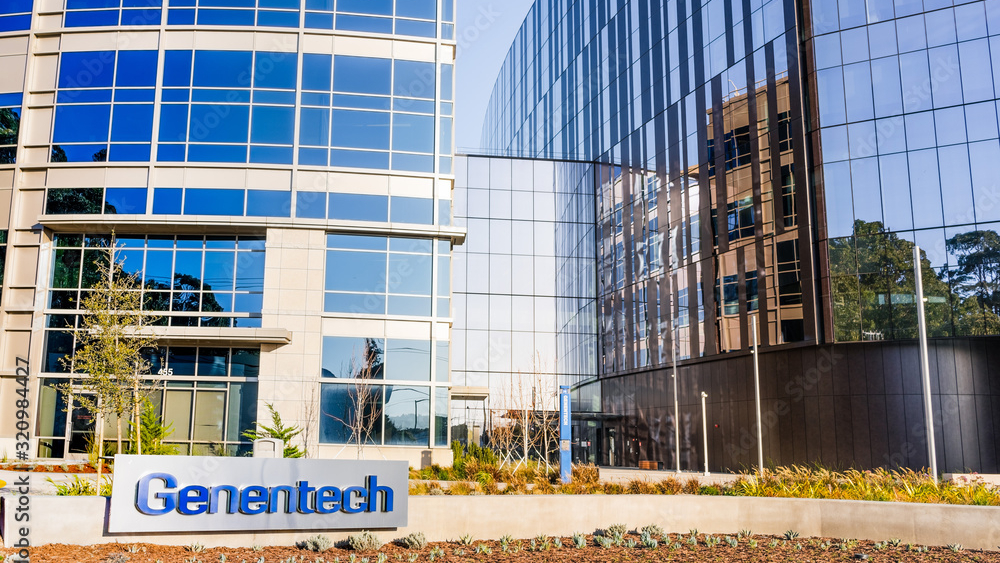
The partnership will be driven via Genentech, conveniently located near NVIDIA in the US. “By harnessing the power of AI models and algorithms with our unique data and experiments, we are unlocking scientific discoveries at remarkable speed and generating insights at an unprecedented scale,” said Aviv Regev, EVP and Head of Genentech Research and Early Development.
“The greatest impact of generative AI will be to fundamentally transform the life sciences and healthcare industries,” added Jensen Huang. “Our collaboration to build the next generation of AI platforms at Genentech will significantly accelerate the pace of drug discovery and development.”
As companies seek to shorten development timelines and bring innovations to patients faster, AI is becoming a decisive competitive advantage in an industry where speed increasingly determines success—and, ultimately, who is in the lead.