Trump Administration tables new version of Biosecure Act
The Trump administration has tabled a new Biosecure Act, prompting industry concern over oversight shift, regulatory uncertainty and need for stronger US biotech strategy.
Nearly two years after the previous U.S. Congress approved the Biosecure Act, an enhanced version embedded in the US$901bn defense package 2026 is now ready for the president’s signature. However, it contains several changes compared with the original version.
Like its predecessor, the new Biosecure Act is primarily intended to guard against national-security threats associated with the activities of Chinese companies. While the first version relied on a blacklist of Chinese life sciences firms, the new proposal changes this approach: it delegates responsibility to the Office of Management and Budget (OMB) to compile such a list and additionally references the Pentagon’s Section 1260H list, which identifies companies linked to the Chinese military, including, reportedly, the heavily expanding U.S. CDMO WuXi.
The cooperation ban also covers federal contracts with pharmaceutical companies that use services or products from firms deemed “of concern.” This is particularly significant given that many U.S. biotech SMEs increasingly conduct early clinical trials in China, where they require only about half the time and costs compared with the U.S., promising a significantly higher return on investment. Previous statistics indicate that approximately 70–80% of U.S. biopharma companies maintain direct collaborations with Chinese firms. To prevent substantial productivity losses resulting from these cooperation bans, earlier versions of the legislation included a transition period until 2032.
If the cooperation bans take effect sooner, legal experts warn that companies increasingly licensing and conducting clinical trials in China could be excluded from working with federal health insurers, with potentially significant impacts on the sector’s U.S. sales.
Influential experts have criticised the new BIOSECURE Act as falling short. Jeremy Levin, one of the leading figures in the U.S. biotech sector, told European Biotechnology: “The new BIOSECURE Act is intended to keep national-security “bad actors” out of U.S. government biotech procurement, but it does so by shifting power from named statutory targets to an OMB-run designation list of “biotechnology companies of concern,” which inevitably opens the door to broader, changeable restrictions by administrative action and raises compliance friction across global supply chains. At the same time, it does not address the larger competitiveness problem—America’s need for a BIOBUILD-style, end-to-end industrial strategy (talent, capital formation, domestic manufacturing, and a predictable regulatory engine) that keeps innovation anchored in the U.S. rather than simply excluding selected foreign capacity. And it is landing amid widely reported disruption and senior-leadership attrition at FDA, which is already increasing planning uncertainty for innovators and investors—an environment that can perversely accelerate China’s pull as it pursues stated bioeconomy leadership ambitions through 2035.”
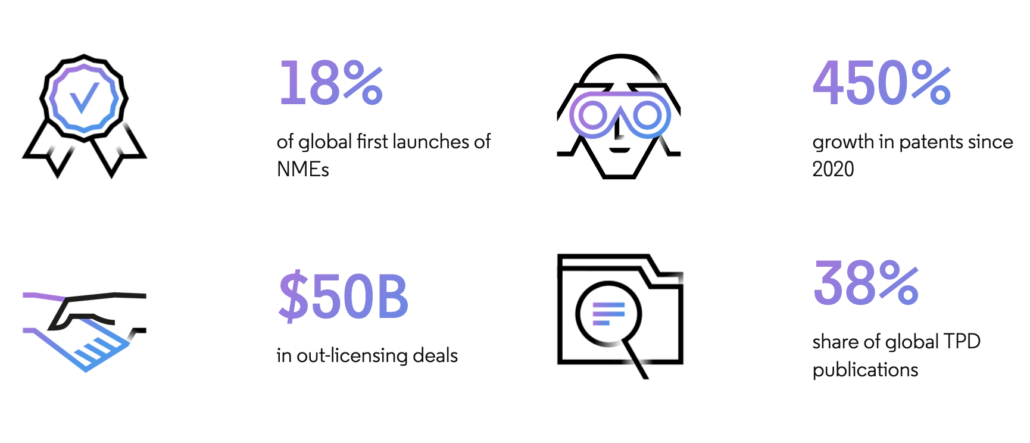
The absence of a dedicated BIOBUILD strategy, previously described by Levin, only inadequately addresses the rise of Chinese biotechnology, as highlighted in a brand-new report by Clarivate.
 Ovid Therapeutics - Jeremy Levin
 Jeremy Levin, Ovid Therapeutics