

Spago Nanomedical seeks delisting to finance cancer drug development
Sweden's Spago Nanomedical will ask shareholders on Nov. 19 to approve delisting from Nasdaq First North, arguing that its listing obstructs financing on acceptable terms for Phase 2a development of its Tumorad radiopharmaceutical in head and neck cancer.
Why it matters: Spago’s plan illustrates Europe’s biotech financing gap: the company believes it can raise more money for its next clinical trial by leaving the stock market than by remaining listed. Its shares fell almost 54% on October 23, the day after the announcement.
- The trial will focus on adenoid cystic carcinoma, a rare salivary gland cancer. Spago says no systemic treatment is approved for recurrent or metastatic disease.
Follow the money: A June rights issue raised SEK 15 million (€1.3 million) before costs, earmarked for completing Phase 1 and preparing, not conducting, Phase 2a. The board says further share issues, loans or an early license would raise too little or involve worse terms.
- “Further development requires capital on a completely different scale to what we have been able to raise on the stock market in recent years,” said Spago chairman Alan Raffensperger in a statement.
- Spago says some specialist investors cannot back listed companies under their mandates. It has hired New York adviser Incentrum Group to widen its search.
The European question: Spago’s predicament echoes a September warning from nine pharmaceutical chairs that Europe is losing investment in drug development, but it also illustrates a more specific problem: access to capital on public markets. The European Life Sciences Coalition, formed in association with Invest Europe, is pushing for more institutional investment in European biotech.
- “Europe does not have a science problem, and early-stage funding is quite healthy. The main gap is in late-stage and public market capital, and it is one we can fix,” Cédric Moreau, a partner at Sofinnova Partners, a coalition member, told European Biotechnology. Moreau estimates late-stage life sciences venture investment in Europe is 8–10 times lower than in the U.S.
- “The opportunity is to bring more European pension and insurance money into life sciences,” Moreau said. “Get this right, and more of the value created by European science will stay in Europe.”
For shareholders: No buyout is proposed. Investors would keep their shares, but Nasdaq trading could end in February 2027, with no organized replacement market initially. Spago is exploring a matching service.
- Swedish investment savings accounts could no longer hold the shares, and EU Market Abuse Regulation disclosure requirements would cease. Spago intends initially to continue periodic reporting.
- Holders of about 65% intend to vote yes, but approval requires 90% of votes cast and shares represented. A separate safeguard allows other investors to block the move if opponents hold a majority of the votes outside Spago’s largest shareholder, Peter Lindell, whose family and companies own 42.6%.
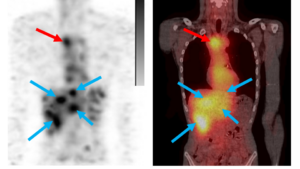
Reality check: Delisting still requires Nasdaq’s approval and would not, by itself, resolve Spago’s funding needs. The company has disclosed neither a budget for Phase 2a nor committed financing. The clinical findings also need perspective: establishing a maximum tolerated dose and showing tumor uptake on scans are steps forward, but neither demonstrates that the treatment shrinks tumors.
 Nuclidium AG
 Molecular Partners AG & NuMeRI, presentation Feb. 2026
 Van Overeem Nuclear BV