

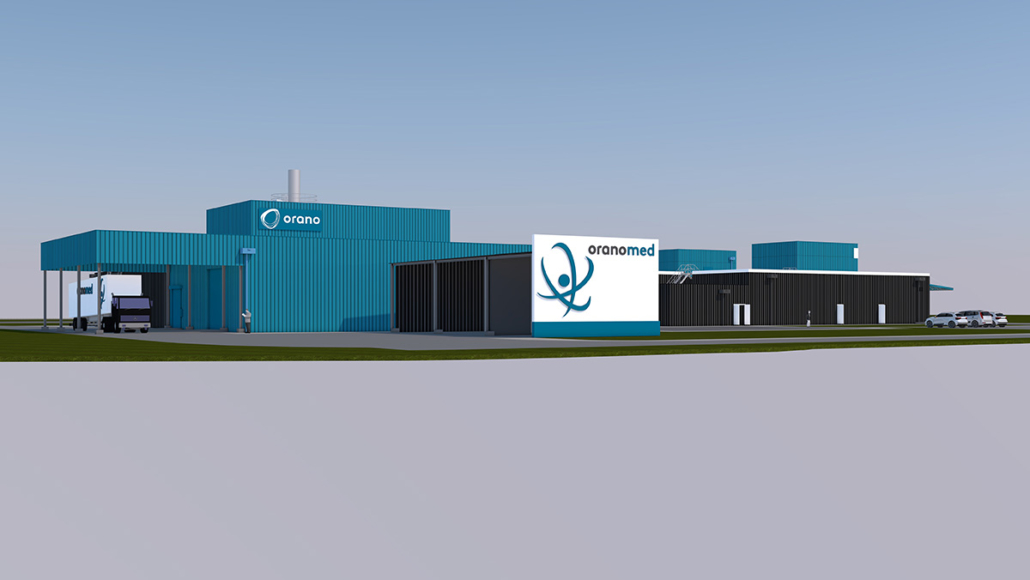
Orano Med and Roche advance towards clinical programme in radiopharmacy
Orano Med and Roche have launched a clinical development programme for CEA‑targeted two‑step PRIT using lead‑212, with Orano supplying the ²¹²Pb, while Novartis and ITM are expanding production of alpha‑emitting radiopharmaceuticals.
Orano Med and Roche have announced their intention to start of an as‑yet unnamed clinical development programme using bispecific antibodies and the “Two‑Step Pretargeted Radioimmunotherapy” (PRIT) concept. A Phase‑1 trial targeting tumours that express the carcinoembryonic antigen (CEA) is scheduled to begin in the first half of 2026. As part of the project, Orano Med will manufacture the alpha‑emitting radioisotope lead‑212 (²¹²Pb) and supply it to Roche for use in the treatment of CEA‑positive cancers.
PRIT works in two sequential steps: first, a bispecific antibody is administered whose one Fab‑region binds to the CEA antigen on the surface of tumour cells — CEA being commonly found in colorectal, pancreatic, gastric and certain lung cancers. Once the antibody has bound to the tumour cells, a radiolabelled ligand carrying ²¹²Pb is administered. This ligand binds to a second docking domain on the bispecific antibody. Preclinical tests have shown that this procedure concentrates the radioactivity on the tumour cells and reduces uptake in healthy tissue, while unbound ligands are rapidly eliminated via the kidneys.
Orano Med produces ²¹²Pb in facilities in France and the United States, using thorium‑232 as the source material. The two‑step PRIT regimen does not require an additional clearance step, allowing the radioligand to directly bind to the tumour‑bound antibody.
Orano Med and Roche aim to create a platform for alpha‑emitting radioimmunotherapies via PRIT. In the broader radiopharmaceutical field, companies such as Novartis and ITM Isotope Technologies Munich SE (ITM) also invest heavily in targeted delivery of alpha or beta emitters. Novartis recently committed to build a new production facility for radioligand therapies in Halle (Saale), Germany, signalling its continued interest in manufacturing radiopharmaceuticals. Meanwhile, ITM has expanded its production capacities — including its new NOVA facility and a joint‑venture for alpha‑isotope manufacturing — to supply a range of medical isotopes.
 adobe stock photos - Michael Derrer Fuchs
  Valanx Biotech
 Marcus Krauss - stock.adobe.com