


GSK buys 35Pharma for $950m, targeting next-generation pulmonary hypertension therapy and the TGF-β superfamily
GSK will pay $950m for Montreal-based 35Pharma to secure HS235, an investigational activin signalling inhibitor that has completed Phase I trials in healthy volunteers and is set to begin studies in pulmonary arterial hypertension (PAH) and pulmonary hypertension due to heart failure with preserved ejection fraction (PH-HFpEF).
With the activin pathway already clinically validated in PAH following the approval of first-in-class agents, the move signals a shift from establishing the mechanism to refining it, and potentially extending it within the wider TGF-β superfamily.
Pulmonary hypertension is a progressive, life-shortening condition marked by elevated blood pressure in the lungs. Early symptoms include breathlessness, fatigue and chest pain, often progressing to right heart failure. Across its various forms, PH affects approximately 82 million people worldwide, while five-year survival remains around 50%.
“Pulmonary hypertension affects millions of people worldwide, yet patients are underserved,” said Tony Wood, Chief Scientific Officer at GSK, as the company confirmed the acquisition.
From proof of concept to optimisation
HS235 targets the activin receptor signalling pathway, part of the broader TGF-β superfamily of signalling proteins.
For 35Pharma’s leadership, the transaction reflects how far the science has advanced. “In recent years, we witnessed a revolution in our understanding of pulmonary hypertension and how this life-threatening disease could be reversed,” said Ilia Tikhomirov, CEO of 35Pharma.
He added that the company is “pleased to be combining our efforts with GSK, a leader in respiratory and inflammatory drivers of disease, who shares our vision of HS235’s potential to transform the treatment of this debilitating condition.”
Under CEO Luke Miels, GSK has increasingly focused on acquiring assets where the biology has already demonstrated clinical proof rather than assuming early discovery risk. In that context, HS235 represents a bet on optimisation within an established therapeutic class.
Differentiation within a validated class
First-in-class activin inhibitors such as Merck’s Winrevair have demonstrated clinical benefit in PAH, but have also highlighted safety considerations, including bleeding events and vascular side effects.
HS235 has been engineered with enhanced selectivity, reducing binding to BMP9 and BMP10, ligands associated with bleeding and telangiectasia, small, visibly dilated blood vessels that can rupture and bleed.
Wood described the candidate as “a potential best-in-class medicine with a differentiated profile to reduce risk of bleeding and provide potential metabolic benefits clinically relevant to PH patients.”
Beyond bleeding risk, early studies have indicated broader metabolic effects, including fat-selective weight loss, preservation of lean mass and improved insulin sensitivity, alongside changes in inflammatory and adipokine markers. These features may be particularly relevant in PH-HFpEF populations, where obesity and metabolic dysfunction are common.
Wood noted that HS235’s “potential protective effects on vascular function, alongside potential benefits on fat-derived markers of metabolism and inflammation, also offer new development opportunities within our Respiratory, Immunology and Inflammation (RI&I) portfolio to achieve broader coverage across the metabolic, inflammatory, vascular and fibrotic drivers of multiple chronic diseases that affect the lung, liver and kidney.”
For Maureen O’Connor, CSO of 35Pharma, the molecule reflects targeted engineering within a proven mechanism. “HS235 is a unique and potentially best-in-class agent that we designed guided by the most recent advances in the field,” she said.
From pulmonary disease to superfamily strategy
35Pharma defines itself as a developer of TGF-β superfamily therapeutics, a family that includes activins and related growth factors governing vascular remodelling, fibrosis, inflammation and metabolic homeostasis across multiple organs.
Wood’s reference to the “metabolic, inflammatory, vascular and fibrotic drivers of multiple chronic diseases” suggests that GSK views the opportunity in broader biological terms. While HS235 is initially being advanced in PAH and PH-HFpEF, the acquisition provides access to engineered expertise within a signalling network increasingly recognised as central to chronic disease biology.
According to the companies’ announcement, the global market for pulmonary hypertension therapies is forecast to reach $18 billion by 2032, with activin signalling inhibitors expected to account for around 50% of that total.
By paying $950m for 35Pharma, GSK is betting that improved selectivity and a differentiated vascular and metabolic profile could position HS235 as a distinct entrant in the next phase of activin pathway competition, and potentially beyond pulmonary hypertension alone.
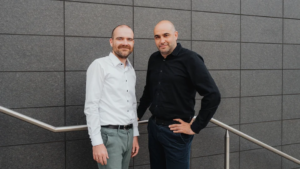 Tubulis GmbH
 Novartis Group
 adobe stock photos - Michael Derrer Fuchs