

Uncertainty regarding the amount of future funding and political support from the European Commission for the bioeconomy is set to hamper investments into the switch from oil-based industry production to renewable, bio-based manufacture in Europe. The schedule for the review of the bioeconomy strategy has been delayed until the end of 2017. More importantly, it is not yet certain if the strategy will be updated.
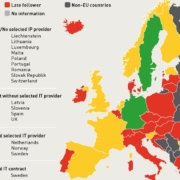
Drug makers have only until two years from now to make their drugs and packaging counterfeit-resistant. By 9 February, 2019, every prescription drug pack must carry a 2D data matrix code that can be tracked by wholesalers and pharmacists along each stage of the value chain. Additionally, each pack must be sealed with an anti-tampering device. If companies and the NMVOs that handle national databases can’t manage the task, their drugs cannot be sold after the deadline.

Until recently, aroma compounds were either sourced directly from plants or made from petrochemicals with the help of chemical synthesis processes. Now a handful of biotechnological production approaches are making headway and inroads into the key sector. There haven’t been real breakthroughs in big F&F markets yet, but biotech companies look poised to change the industry forever.
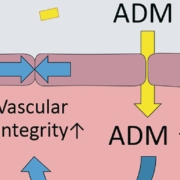
German Adrenomed AG has decided to start clinical Phase II tests of the very first personalised treatment for the six million patients with acute congestive heart failure. Large trials suggest that the company can stratify patients resistant to diuretics standard therapy by a proprietary companion diagnostics blood test. Adrenomed will assess whether its first-in-class antibody adrecizumab can reverse the congestion that that manifests as pulmonary edema.

Italian, Swedish, and German researchers have started recruitment for a systematic investigation into the factors affecting longevity.
German and Swedish researchers have presented a strategy to predict and improve chemotherapy outcomes in patients with acute myelogenous leukaemia (AML). Currently, the five-year overall survival rate of AML patients treated with cytarabine (ara-C) standard chemotherapy ranges from 20-70%.

Police investigators today begin searches for perpetrators with conventional DNA profiling – comparing a genetic signature from sperm or hair left at a crime scene with a database of identified offenders. But that doesn’t finger culprits who have never been registered. A growing technology called DNA phenotyping’ is now aimed at interpreting genomic clues about a suspect’s possible external appearance. The science behind it is new, and investigators have to navigate the statistical uncertainties – as well as ethical and legal questions – the technology is raising all over Europe.
European life sciences industry associations have voiced concerns over the latest addition to the European Patent Office’s ambitious Early Certainty Initiative. While cutting the time for determining patentability to six months from filing, and streamlining the duration of the opposition procedure from 26 down to 15 months have been widely applauded, they warn that plans for a one-size-fits-all plan that limits examination time to 12 months will harm the life sciences sector.
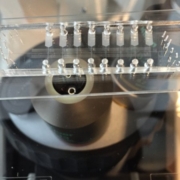
Scientists at EPFL in Lausanne have developed a semi-automated technology that may be a game-changer by making the characterisation of the 2,000 DNA-binding proteins much faster, more accurate, and efficient.
To date, insurance business models have always been based on damage control, but that paradigm is changing. Some insurers are now trying to hedge bets by motivating customers to get healthier and track that progress with the help of technology. Critics are concerned about data protection issues, and see this as a first step towards individualised premiums that will erode the principle of solidarity. What are the potential upsides and downsides for customers and societies?