Swiss VC Redalpine closes eighth fund at $250 million
Swiss venture capital investor Redalpine has closed its eighth fund at $250 million. Redalpine Capital VIII reached its hard cap and was oversubscribed, according to the firm. Less than 12 months passed between the first and final closings. In what remains a challenging fundraising environment for European venture capital firms, this represents a relatively quick closing.
Its predecessor, Redalpine Capital VII, closed at $200 million in 2024. The new fund is therefore 25% larger. This development contrasts with the overall decline in fundraising in German-speaking countries. According to PitchBook data, 83 venture capital funds closed in 2022, raising a combined €6.2 billion. In the first nine months of 2025, only 21 funds closed, raising a total of €2 billion. The median time between a fund’s launch and final closing most recently stood at 26 months.
Redalpine needed less than a year for its new fund. The closing therefore also suggests that institutional and private investors remain willing to commit capital to established European venture capital managers with a clear investment strategy.
Backstory: Redalpine was founded in Zurich in 2006 and has since moved its headquarters to Zug. The firm also maintains offices in Berlin and London. The investor focuses on European early-stage companies and primarily leads seed and Series A financing rounds. The new fund is expected to finance around 20 companies. Overall, Redalpine holds investments in more than 100 companies. Typical individual investments range from $1 million to $15 million.
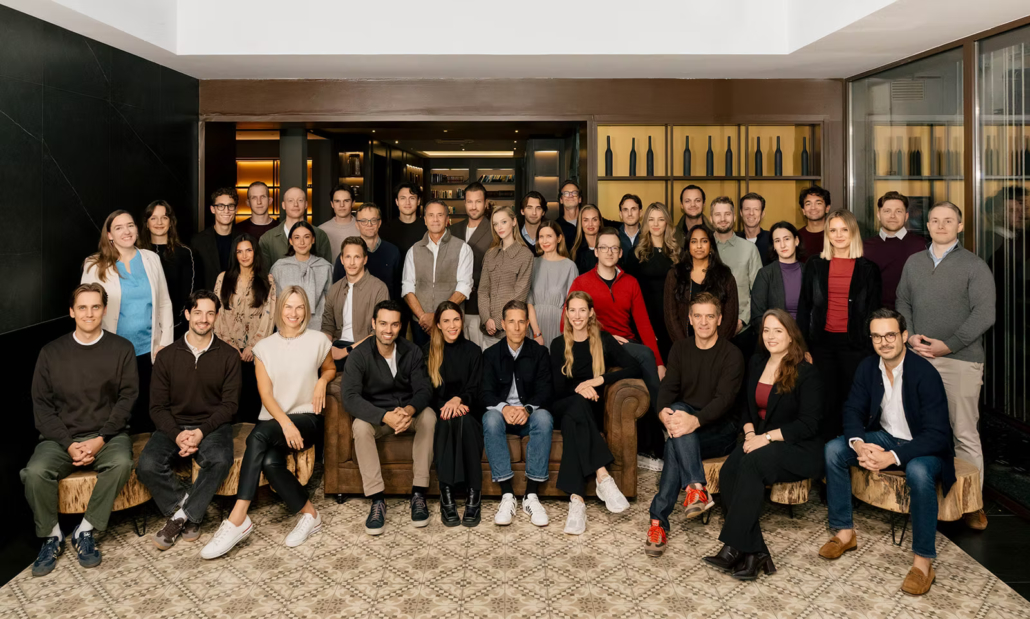
One distinguishing feature is the scientific and technical orientation of its investment team: Approximately half of its employees have an academic background in natural sciences or a technical discipline. This is particularly relevant when evaluating technology-intensive business models, where scientific differentiation, development risks, and the transferability of a technology to industrial or medical applications play a central role.
Accordingly, its investment portfolio covers a broad range of sectors. Redalpine invests in life sciences and biotechnology as well as other deep-tech fields and technology-driven business models. Recent investments from the eighth fund include Zurich-based Enact Intelligence, Berlin-based telli, and Munich start-up microagi.
Track record: Redalpine has achieved several notable exits from its life sciences portfolio in recent years. These include Araris Biotech, which was acquired by Japanese pharmaceutical company Taiho. The deal has a potential total value of up to $1.14 billion, including milestone payments. Memo Therapeutics also changed hands: Ipsen acquired the Swiss biotech company in a transaction with a potential total value of more than €700 million, including performance-related payments.
Alongside life sciences, deep-tech companies are central to the investment strategy. One example is Munich-based Proxima Fusion, whose seed financing round was led by Redalpine. The fusion energy company was valued at €2.4 billion in July. This valuation highlights the potential that investors now also see in particularly capital-intensive European technologies of the future.
Another exit came with the sale of AI security company Lakera to Check Point. The portfolio thus demonstrates that Redalpine is not limited to a single industry but finances scientifically and technologically sophisticated business models across different markets.
The big picture: Redalpine’s success story began with an early-stage fund. Today, its partners operate an investment platform comprising several funds. Behind this is a clear objective: The value created by technology companies in Europe should remain with European investors.
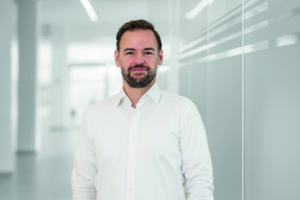
“Europe’s confidence is back. Nowhere is this more visible than among institutional investors, who are now investing in European technology with full conviction,” says Rafael Hubatschek, Partner and Head of Investor Relations. “Our fund platform allows us to support founders from their first financing round through the scaling phase and beyond, until they become global leaders in their respective categories.”
With its eighth fund, the investor is continuing this strategy. The combination of scientific expertise, a focus on European early-stage companies, and a willingness to finance businesses at an early stage of development remains central to its profile. In an interview with transkript, our sister publication covering biotech in Germany, the team explains how Redalpine assesses the current capital market environment, what role life sciences will play in its future portfolio, and which criteria guide its investment decisions:
transkript: The constant mantra currently heard in VC circles is that there is plenty of money available. However, compared with defense, space, AI, and other technology fields, the life sciences sector sometimes struggles to make the case for returns that are perceived as risky. Is that also your experience?
Redalpine: The money is there, but it is looking for safety. The industry has returned little capital in recent years, so before making a new commitment, every investor asks: Which manager has returned money to investors? Capital is becoming increasingly concentrated among managers with a track record of distributions. Life sciences currently faces greater structural challenges, that is true: longer development timelines, binary risks, and high capital requirements. This does not affect us for two reasons. We have delivered: Memo Therapeutics to Ipsen, Araris to Taiho, Lunaphore to Bio-Techne, all from earlier funds, with the patience that this industry requires. And our investors get software and science in a single fund.
transkript: Why have things gone better for you?
Redalpine: Because we have delivered consistently for 20 years. We have been through several cycles, and during periods like these, capital flows to those who have delivered top-quartile performance over the years. The second reason is our strategy. Half of our investment team are scientists. We finance companies whose technologies are difficult to copy. Founders with scientific backgrounds greatly appreciate having people at our firm who can engage with them on equal terms. The third reason is that investors invest in teams. How experienced is the team? How disciplined was it in 2021, when everyone was investing at high valuations? These questions have become more important, and the answers have worked in our favor.
transkript: Does your fund benefit from larger funds of funds in Germany and Europe as sources of capital, or do you have other established investor relationships?
Redalpine: Both. We started 20 years ago with angel investors, entrepreneurs, and family offices. They are still with us today. Over time, our investor base has gradually become more institutionalized: funds of funds, corporates, sovereign wealth funds, banks, insurance companies, and pension funds. For the new fund, around one-third of the capital comes from institutions we had never spoken to before, including several pension funds and insurance companies. The rest comes from investors who already knew us.
transkript: How exactly do you intend to invest the capital from the new fund? Which areas will receive funding, and approximately how much?
Redalpine: We will continue doing what we have done for 20 years: software and science, technically differentiated companies. We do not have a fixed allocation for each sector. We invest where the team and the technology hedge come together. The first investments from the new fund demonstrate the breadth of our approach: Zurich-based Enact Intelligence is developing robotics, Paris-based Arlequin AI protects critical systems, and London-based Helical operates an AI lab.
transkript: Approximately what proportion of the fund do you reserve for the existing portfolio?
Redalpine: Up to 50%. That is part of our strategy: If you invest early, you must be able to participate in the critical financing rounds that follow. Otherwise, the value of taking that early risk gets diluted. If a later round is larger than the fund should handle on its own, we bring our investors in directly. We only do that when it really makes sense. These are often opportunities that investors would otherwise not have access to because we have been supporting the company for years.
Editor’s note: the interview above was translated from German.