Fresenius Ventures’ managing director: Europe has the investors. It needs the capital.
Following Fresenius’ launch of a €200 million healthcare venture fund in July, we invited Thomas Thestrup, managing director of Fresenius Ventures, to share his perspective in the Autumn issue of European Biotechnology. His argument: Europe has the innovation and the corporate investment expertise to compete globally, but needs more capital from its own healthcare companies to prevent the value created by European science from moving elsewhere. Here's what he had to say:
The medicines and devices that will shape European healthcare over the next decade are mostly invented by companies that are still small, or that do not yet exist. Between 2015 and 2021, 65% of new drugs approved for the world’s twenty largest pharmaceutical companies were brought in through licensing or acquisition. The same holds true in medtech, diagnostics and care provision. A strong R&D function is no longer enough. Companies must also be connected to the innovation they do not own.
Europe is not short of innovation. It is short of the means to hold on to it. The region’s share of global pharmaceutical R&D investment has fallen from 41% at the start of the century to around 31%. In 2025, U.S. stock exchanges took an estimated 98% of the world’s biotech IPO capital, and mid-sized European drugmakers spent the year acquiring American biotechs rather than being acquired. The science is still here. The value it creates is increasingly drifting west.
This is not a capability problem. Large European pharma already knows how to be an investor: Novartis, Roche, Sanofi, Boehringer Ingelheim and Novo have run venture arms for decades, and two of the three most active corporate investors behind the roughly 70% of biopharma companies that went public since 2022 are European. Even the number of active corporate venture capital units in Europe is not far behind North America’s: an estimated 820 against roughly 1,030. What Europe lacks is not capability, but capital deployment. U.S. venture funds manage close to six times the capital of their European counterparts and invest around six times as much every year. Yet many mid-sized pharmaceutical, medtech and diagnostics companies remain on the sidelines. And care providers across the continent still have only little to no venture capabilities.
A minority stake taken early is the cheapest, most informed way to understand a technology years before any acquisition, and beats meeting that company in a banker-run auction later. It is a two-way exchange: an industrial parent can offer medical, regulatory and operational expertise as well as access to clinical, scientific and academic networks that help a young company scale – creating value beyond capital alone.
Corporate investors can play a growing role in Europe’s innovation ecosystem: patient investors that can engage early, are not constrained by traditional fund cycles, and can provide meaningful strategic support. This is the opportunity Fresenius Ventures was created to pursue.
Europe has spent years debating how to stay competitive in healthcare and life sciences. While policymakers continue to refine the framework for innovation, corporate investors do not need to wait. By backing the next generation of healthcare companies today, wherever they emerge, European corporates can strengthen their own competitiveness and ensure that more of tomorrow’s healthcare value creation remains connected to Europe.
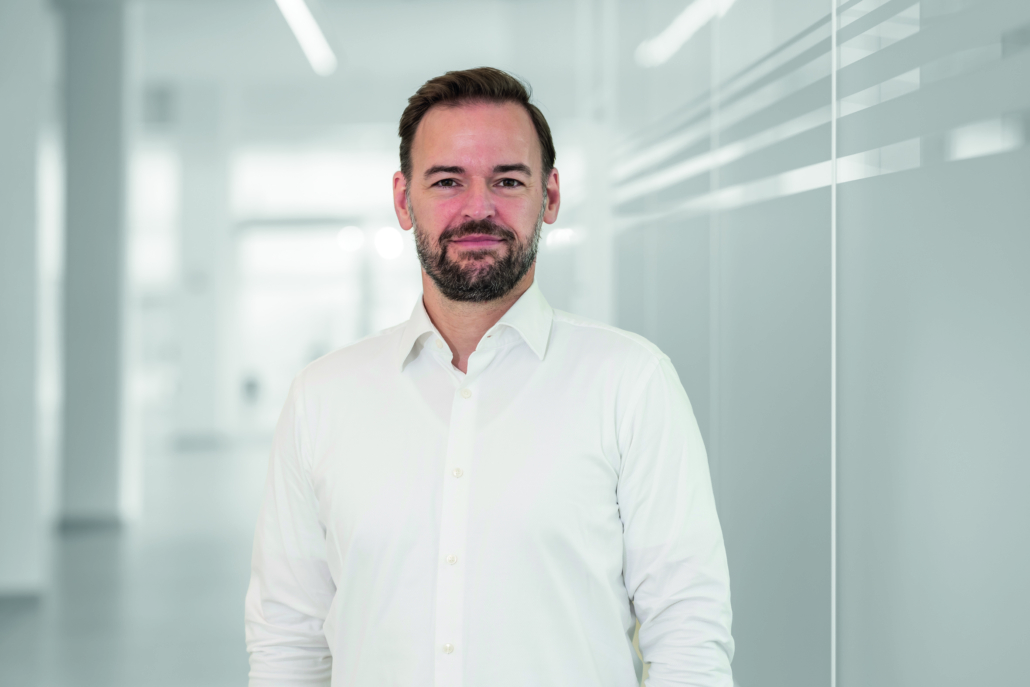
Thomas Thestrup
About the author: Thomas Thestrup is Managing Director of Fresenius Ventures, the newly established venture arm of Fresenius, a >€200 million fund investing in growth fields adjacent to (Bio)Pharma, MedTech and Care Provision. Before joining Fresenius, he co-founded two companies, held business development roles at Lundbeck and UCB Pharma, and invested in life sciences through Sunstone Capital and Angelini Ventures. He holds a PhD in neuroscience and protein engineering.