

Novartis ends BioArctic brain-delivery deal worth up to $802M
Swedish biotech BioArctic has lost a partnership with Swiss drugmaker Novartis to develop a potential treatment for neurodegenerative diseases using its BrainTransporter technology. The termination eliminates the prospect of up to $772 million (€691 million) in additional payments, although BioArctic retains the $30 million (€27 million) upfront payment.
Why it matters: Novartis’ decision, announced late on November 2, ends one of BioArctic’s partnerships with large drugmakers to develop treatments designed to cross the blood-brain barrier, and BioArctic’s shares fell more than 7% in early trading in Stockholm on Tuesday before recovering slowly in the following hours.
“The decision by Novartis relates specifically to the Novartis program and, as Novartis has informed us, is unrelated to BioArctic’s BrainTransporter technology,” BioArctic told European Biotechnology. “Our other BrainTransporter collaborations, including the collaboration with Eli Lilly, are not affected and continue independently.”
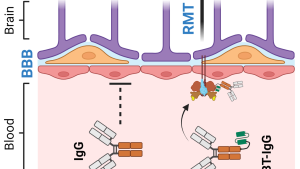
Zoom in: BrainTransporter is designed to carry drugs such as antibodies across the blood-brain barrier using the transferrin receptor, which the body uses to move iron into the brain. Under the August 2025 agreement, BioArctic was to combine BrainTransporter with an undisclosed Novartis antibody, and Novartis held an option to license the resulting drug candidate and assume full responsibility for its global development and commercialization.
While BioArctic says it cannot disclose further details about the collaboration or the disease target, it has claimed elsewhere that less than 1% of antibodies given into the bloodstream reach the brain and that the technology raised the brain exposure of an amyloid-beta antibody up to 70-fold, noting that the result came from preclinical models.
Novartis has dropped other neurodegeneration work this fall, ending development of its antibody lifonebart in ALS in September and in Alzheimer’s disease in October.
Follow the money: The additional payments, along with tiered mid-single-digit royalties on sales, depended on Novartis exercising its option.
BioArctic says it will recognize the remaining unrecognized portion of the upfront payment as revenue in 2026.
BioArctic, which drew most of its second-quarter revenue from royalties on the Alzheimer’s drug Leqembi, reported SEK 1,990 million (€181 million) in cash and short-term investments at the end of June.
The big picture: Both companies are pursuing brain delivery through other deals.
- BioArctic continues to work on BrainTransporter with Eisai, Bristol Myers Squibb, Mesenkia Therapeutics and Eli Lilly. Lilly’s deal, signed in June, carries $30 million upfront and up to $770 million (€689 million) in potential milestones plus royalties.
- In September, Novartis exercised an option to acquire global rights to the brain-delivery platform of U.S.-Chinese biotech Sironax for $125 million (€106 million at the time), under an agreement announced in July 2025.
What’s next: “BrainTransporter is currently in preclinical development and has not yet been tested in humans,” BioArctic told European Biotechnology. “We are advancing several BrainTransporter-based programs toward clinical development, but we have not communicated a specific timeline for the first clinical study.”

 Freepik.com
 BioArctic AB