

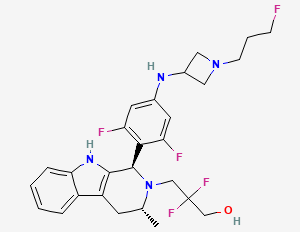
Roche presents details on breast cancer pill giredestrant
Roche has unveiled detailed data for its oral selective estrogen receptor degrader (SERD), giredestrant, at the 2025 San Antonio Breast Cancer Symposium.
Roche has unveiled detailed data for its oral selective estrogen receptor degrader (SERD), giredestrant, at the 2025 San Antonio Breast Cancer Symposium. As previously announced, the results demonstrate clinically significant efficacy among oral SERDs in early-stage adjuvant breast cancer.
Clinical data
In the Phase III lidERA trial, 4,100 patients with early-stage, ER-positive, HER2-negative breast cancer at medium to high risk of recurrence were randomized to receive giredestrant or standard-of-care endocrine therapy. The primary endpoint of invasive disease-free survival (iDFS) showed that 6.7% of patients on giredestrant experienced invasive recurrence or death, compared with 9.4% in the control arm, corresponding to a hazard ratio of 0.70, or a 30% relative risk reduction. This benefit was consistent across all clinically relevant subgroups. Secondary endpoints included three-year iDFS, which was 92.4% for giredestrant versus 89.6% for control, and distant recurrence-free interval, showing a 31% risk reduction. Interim overall survival trended in favor of giredestrant (2.7% vs. 3.4%) but has not yet reached statistical significance. Giredestrant was generally well tolerated; bradycardia occurred in 11.3% of patients, mostly asymptomatic, gastrointestinal events were predominantly grade 1–2, and fewer patients discontinued due to joint pain compared with control (1.8% vs. 4.4%). According to Dr. Aditya Bardia (UCLA Health), giredestrant may be combined with CDK4/6 inhibitors for high-risk patients, and studies exploring these combinations are ongoing.
In advanced breast cancer, giredestrant also showed activity. In the evERA Phase III trial, patients with ER-positive, HER2-negative, ESR1-mutant tumors receiving giredestrant plus Everolimus experienced a 62% reduction in progression risk compared with control, and median progression-free survival increased to 9.99 months from 5.45 months. In the overall population, progression or death risk fell by 44%, and safety was consistent with Everolimus. In the acelERA Phase II trial, the primary endpoint of investigator-assessed progression-free survival was not met (HR 0.81, p=0.176), though the ESR1-mutant subgroup showed HR 0.60 and secondary endpoints, including clinical benefit rate and objective response rate, numerically favored giredestrant. Safety remained comparable to standard therapy. These data support continued evaluation of giredestrant in ESR1-mutant advanced disease, said Roche.
Competitive landscape
Giredestrant is being studied in five Phase III trials spanning early, locally advanced, and metastatic ER-positive breast cancer, including combinations with Everolimus, CDK4/6 inhibitors, and Phesgo. Roche is positioned to be the first company establishing an oral SERD in the adjuvant market. Competitors include AstraZeneca (results expected 2026) and Eli Lilly (SERD Inluriyo, further data expected 2027).
 Roche
Roche adobe stock photos - Sundry Photography
  Roche
Roche