


EU trilogue sets clear path for new genomic techniques
After four EU Council presidencies, EU member states and the European Parliament yesterday struck a provisional deal on new genomic techniques under the current Danish presidency, setting clear rules to boost agrifood innovation, plant resilience, transparency and sustainability.
The European Union has reached a provisional political agreement on a landmark regulation for new genomic techniques (NGTs), marking a major step toward a more competitive, climate-resilient and sustainable agrifood system. The deal between the Council and the European Parliament outlines a modernised legal framework designed to protect health and the environment while enabling innovation and ensuring fair market conditions across the EU.
NGTs refer to advanced plant-breeding techniques that mimic changes occurring naturally or through traditional breeding. These tools allow breeders to develop improved plant varieties faster and with greater precision—helping farmers face climate-driven threats such as droughts and floods and reducing reliance on fertilisers and pesticides.
Danish Minister for Food, Agriculture and Fisheries Jacob Jensen welcomed the agreement, noting that NGTs “can help us do more with less” by enabling the creation of robust and resource-efficient crops that safeguard Europe’s food security.
Category 1: Equivalence to Conventional Plants
The agreement confirms that Category 1 NGT plants are to be treated as equivalent to conventional varieties. National authorities will verify category classification, but offspring of approved category 1 plants will not require repeated checks.
To maintain transparency without creating excessive burdens, seeds and reproductive material from NGT-1 plants will carry labels, whereas consumer products will not. The EU institutions also established an exclusion list: traits such as herbicide tolerance and the production of known insecticidal substances cannot qualify under Category 1 and will automatically fall into Category 2.
Category 2: Stricter Oversight for Non-Equivalent Modifications
Plants with more complex genomic changes will fall under Category 2 and remain regulated under existing GMO legislation. Mandatory labelling will apply, and any trait information provided must be fully comprehensive—an addition endorsed by the Council to ensure clarity for consumers.
Member states will retain the right to opt out of cultivating Category 2 NGT plants and may implement optional coexistence measures to reduce unintentional presence in supply chains.
Intellectual Property and Transparency Measures
Responding to long-standing concerns from plant breeders and farmers, the regulation introduces new transparency obligations. Applicants registering Category 1 NGT plants must disclose all relevant existing or pending patents, with this information made publicly accessible through an EU database. Companies can also voluntarily share details on licensing intentions under fair conditions.
A new expert group—bringing together specialists from member states, the Community Plant Variety Office and the European Patent Office—will assess how patenting affects seed availability and innovation. Within one year of the regulation’s entry into force, the European Commission will publish a comprehensive impact study and propose any necessary follow-up actions or legislation.
What Happens Next?
The provisional agreement now moves to formal endorsement by both the Council and the European Parliament. Once adopted, the EU will introduce a tailored regulatory framework that differentiates modern NGT plants from GMOs while maintaining stringent safety standards.
This update reflects two decades of scientific progress since the original GMO legislation of 2001 and is intended to future-proof Europe’s ability to develop safe, resilient and sustainable crops.
Comments
Viola Bronsema, Managing Director of BIO Germany, comments: “We are very pleased with this compromise. Finally, promising biotechnological methods such as the CRISPR/Cas gene-editing tool can also be used in practice to improve crops. Breeders now have an additional tool at their disposal to make plants more resilient to climate change and to ensure that they are more productive, nutritious, and resistant to pests. This decision by the EU was long overdue.”
Garlich von Essen, Secretary General and CEO of Euroseeds, said: “This agreement is a signal Europe’s seed sector and farmers urgently needed.”
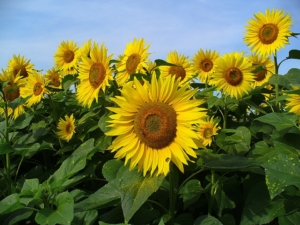 H. Zell - wikipedia.org
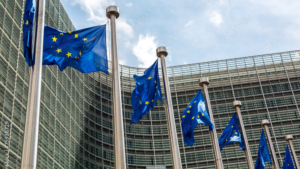 adobe stock photos - Sergii Figurnyi
  Polish Ministry of Agriculture - MRiRW