
The connective matrix: ELRIG’s role in the drug discovery ecosystem
Drug discovery depends on more than breakthrough science alone. Progress increasingly emerges from connected ecosystems where academia, biotech, pharma, CROs and technology providers can openly exchange ideas, challenge assumptions and accelerate innovation together.
A cell becomes meaningful only when it is part of a functioning biological tissue. In isolation, there is no surface to adhere to, no neighbours to signal and no complex architecture to contribute to. Metaphorically, the same is true of the stakeholders that populate the drug discovery ecosystem. Large pharma, specialist biotechs, CROs, academic centres, platform technology companies, and funders each represent a distinct cell type; specialised, capable, and inherently valuable. The field has many talented cells, and uniquely ELRIG acts as a matrix: a structural scaffold on which those cells can assemble, where they can exchange signals, and within which they can organise into something capable of doing what no single cell can do alone.
Founded in 1999 as a grassroots network for laboratory researchers in the UK, the organisation has evolved considerably whilst maintaining its founding instinct. ELRIG is scientist-led, not commercially driven, with governance shaped by practitioners and programmes developed around what the community identifies as genuinely important rather than sponsorship priorities or vendor roadmaps. A matrix shaped by external forces tends to organise around someone else’s priorities. A matrix shaped by the cells themselves tends to produce healthier tissue. “ELRIG is unusual in that it is genuinely community owned. The agenda is set by scientists, for scientists – which is why the discussions and networking are more candid.”
How ELRIG serves the ecosystem
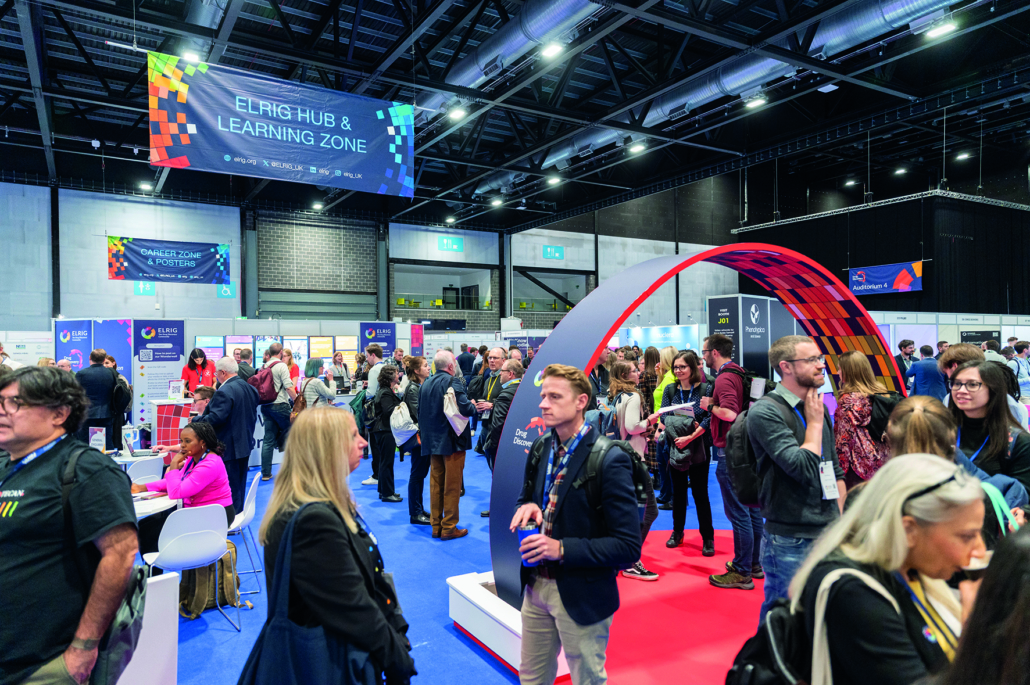
ELRIG’s flagship Drug Discovery meeting – alternating annually between London and Liverpool – creates that tissue by assembling multiple parts of the drug discovery ecosystem simultaneously. For pharma scientists, it provides a temperature check on emerging methodologies: what is gaining traction, what remains experimental, and where scepticism outweighs enthusiasm. For early-career researchers and biotech scientists, it is one of the most accessible entry points into a professional network spanning the breadth of the discipline. For technology providers, it offers something rarer still – a conference hall full of scientifically engaged researchers who will critically evaluate a platform rather than simply receive a sales pitch.
Commercial conferences often optimise for one audience, perhaps buyers or investors, whilst academic symposia tend to focus on publication-stage science. ELRIG instead creates a collaborative environment where researchers can openly discuss methods before they are fully validated and share failures as well as successes. It is, in biological terms, a permissive matrix that allows different cells to interact without any single type crowding the others out.
Conferences and forums
A defining feature of ELRIG’s programming model is its distinction between conferences and forums. Conferences are designed for breadth: large gatherings that surface emerging themes and bring the wider community into contact. Forums are intentionally smaller and more focused, convened around specific scientific or methodological questions with enough depth and candour to move discussion forward.
This model has proven particularly valuable for emerging modalities where scientific consensus is still forming. Areas such as targeted protein degradation, engineering biology and DNA-encoded libraries have all benefited from specialist ELRIG forums that convened scientists with expertise across the field. The formats are complementary: conferences build the community and surface the landscape, while forums allow deeper exploration of new scientific themes.
Volunteers and working groups
ELRIG’s programming does not emerge from a central editorial team. It is built meeting by meeting and forum by forum by volunteer scientists drawn from across the community. These volunteers are the cells that construct and maintain the matrix itself: people who give their time because they believe in the value of the tissue and want to shape what it becomes.
Working groups bring together scientists from pharma, biotech, academia and CROs with complementary expertise and perspectives. Innovation strategy identifies emerging technologies and scientific themes. Science strategy helps ensure programmes remain rigorous and relevant. Vendor strategy supports collaboration with technology and service providers, while engagement strategy broadens participation across the community. Early careers groups focus on supporting and connecting the next generation of scientists, and sustainability strategy helps maintain the organisation’s long-term independence and stability.
The model has a compounding effect. Volunteers who contribute to one programme develop a deeper understanding of the field’s shared challenges, making future contributions even more valuable. Working groups that operate over several years also develop an institutional memory that commercially organised events struggle to replicate.
The volunteer structure also gives ELRIG an unusual degree of agility. Because programmes are developed by active researchers working at the forefront of their disciplines, the organisation can respond quickly to emerging science. As new areas develop – from spatial transcriptomics and AI-enabled drug discovery to induced proximity science and advanced automation – working groups can rapidly convene expertise and build programmes around topics before they become fully established.
“Precompetitive space is where the field moves fastest. ELRIG has been unusually effective at creating the conditions in which organisations that compete commercially will share methodological knowledge for mutual benefit.” The precompetitive dimension of ELRIG’s model is increasingly important. As the field grapples with data standardisation, AI model validation and the reproducibility of complex biological assays, the value of a trusted environment that brings competing organisations into productive proximity is difficult to overstate. Few organisations have the scale or incentive to solve these challenges alone, but addressed collectively through working groups, benchmarking and open discussion they become more tractable.
Although ELRIG remains largely focused on the UK and Europe, the challenges it engages with are global in nature. Translating AI-driven insights into viable drug candidates, building more predictive preclinical models and integrating automation without losing scientific intuition are shared challenges across the industry.
What ELRIG offers is not a solution to the challenges of drug discovery, but something more fundamental: a persistent, trusted scaffold in which the people working on some of medicine’s hardest problems can adhere, signal and collaborate. Remove the matrix, and you are left with isolated cells. Keep it healthy, and the tissue can do remarkable things.
Contact:
ELRIG (UK) Ltd.,
Salisbury House, Station Road,
Cambridge, CB1 2LA,
United Kingdom
info@elrig.org
 SLAS
SLAS