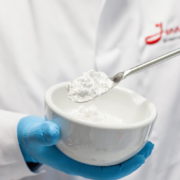
Rare functional sugars provide huge market opportunities. European Biotechnology spoke with Stefan Jennewein, Founder and CEO of Jennewein Biotechnologies, about the company’s strategy and its latest expansions to the Chinese market.

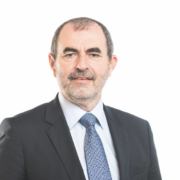
Rare functional sugars provide huge market opportunities. European Biotechnology spoke with Stefan Jennewein, Founder and CEO of Jennewein Biotechnologies, about the company’s strategy and its latest expansions to the Chinese market.

With partner Indivior exchanging a late-stage addiction programme for early-stage alternatives, 2019 did not start exceptionally well for Addex Therapeutics. But, the Swiss drug developer has shown the stamina to withstand far more serious setbacks in the past. For EuroBiotech, Addex’s CEO Tim Dyer recounts the company’s history and outlines its future.
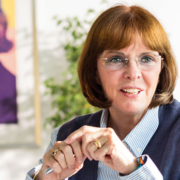
Within the record time of nine months, the Austrian government, together with experts of the Austrian Bioeconomy plattform and the sustainability think tank Denkstatt, has worked out a national bioeconomy strategy. European Biotechnology spoke with Josef Plank, Secretary General at the leading Federal Ministry of Sustainability about the focus and ambition of the national initiative.

Antimicrobial resistance (AMR) is a global threat, particularly given the modest activity in the pipeline of new antimicrobials in development, and emerging resistance to existing antibiotics. In 2016, Lord Jim O’Neill published a globally-focused review on AMR, which highlighted the lack of incentives for new antimicrobial development and encouraged a worldwide system of push’ and pull’ incentives to stimulate new drug development.

According to the FMD 2011/62, serialisation of all prescription drug packs in Europe will inevitably become a daily routine for the pharmaceutical industry from 2019. European Biotechnology spoke with Philip Falkenstein, Product Manager at Bähren Druck, about the use of pre-serialised labels as solution for special implementation areas and the current legal framework.

In February, Johnson & Johnson Innovation, JLABS opened its first European open innovation incubator, JLABs @ BE, at the heart of the Beerse Janssen R&D Campus in Belgium. European Biotechnology spoke with Günter Huhle, Head of Johnson & Johnson Innovation JLABS EMEA, about Johnson & Johnson‘s approach to open innovation and its tremendous global innovation network, currently comprising ten incubators and over 420 companies that have collectively raised over US$10bn in growth capital.

Big Pharma’s interest in R&D on anti-infectives declined when other areas like oncology began offering higher returns. A few biotechs mirror pharma (Basilea, Idorsia and Polyphor), but could stay hidden gems.

Back in February 2017, CDMO Rentschler Biopharma SE and formulation specialist Leukocare AG joined forces to give biologics and biosimilar makers a competitive edge through significantly stabilised end products. European Biotechnology spoke with Leukocare’s CEO Michael Scholl about the impact of formulation on drug product performance.
Following last year’s approval by the US FDA, the EU’s EMA has now also approved the first two T-cell-based immunotherapies against certain types of cancer. This marks the ultimate proof-of-concept for the acceptance of patient-individualised cellular immunotherapies. The regulatory authorities have moved fast, together with the companies and manufacturers, to bring these products to patients as quickly as possible. This is a good start but what does the future hold?

Independent investment analyst, Managing Director EQUI.TS GmbH_ Big data analytics is poised to change the way business is done in the life sciences. A string of recent M&A transactions illustrate this trend.