


What’s next for argenx, Europe’s autoimmune breakthrough?
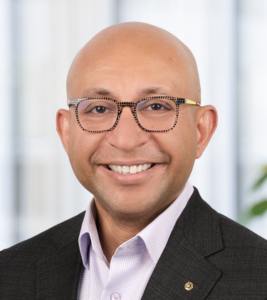
Over the past few years, Belgium’s argenx has become a biotech force to be reckoned with, driven by the success of its autoimmune drug Vyvgart (efgartigimod alfa) in diseases such as generalised myasthenia gravis (gMG) and chronic inflammatory demyelinating polyneuropathy (CIDP). We caught up with CEO Karen Massey to discuss how she plans to build on this success after joining argenx in March 2023 and taking up the role of CEO at the start of this year.
European Biotechnology: What attracted you to the job at argenx?
Karen Massey: All over the world, people are living with debilitating autoimmune diseases. Many endure diagnostic odysseys that last for years, going from doctor to doctor as they try to work out what condition they have. And when they do eventually find out, treatment options – often unchanged for decades – can be incredibly limited, and also burdensome. I wanted to be part of a dynamic company – one that is grounded in science and focused on addressing these significant unmet needs. I wanted to be part of a team that is building a different type of biotech.
This combination of scientific ambition and patient focus really stood out to me when I first met Tim Van Hauwermeiren, one of the co-founders of argenx and now our Chairman. Having worked across commercial teams and at earlier stages of the value chain during my career, I felt I could bring a broader perspective that would complement the expertise already within the company and help contribute to its next stage of growth.
argenx is a company that not only responds to the needs of patients today but is continually anticipating what patients – and other stakeholders – will need in the future. The company combines a listening- and understanding-first approach to the development of medicines with a real spirit of co-creation and scientific entrepreneurship. We work closely with clinicians and patients to learn what they really need in order to achieve better outcomes. Through our Immunology Innovation Program (IIP) – a program that integrates leading biologists from academic centres across the world into argenx research teams – argenx is building a deep understanding of the underlying biology driving autoimmune conditions.
By combining these insights with argenx’s antibody-engineering expertise, argenx has been able to move at pace to develop and deliver efgartigimod, a precision therapy that is changing the treatment paradigm in generalised myasthenia gravis (gMG) and chronic inflammatory demyelinating polyneuropathy (CIDP), two rare neuromuscular autoimmune conditions. We’re now very hopeful we’ll be able to do the same for other IgG-mediated autoimmune rheumatological conditions, including autoimmune myositis.
EB: You worked almost a decade at Roche’s Genentech before joining argenx. What’s the difference between working for a large pharma group and argenx?
Massey: What is consistent at both companies is the patient focus. Roche and argenx put the patient at the center of everything they do. Having worked directly with physicians earlier in my career, I have seen first-hand the difference bringing innovative medicines can make to patients’ lives. This is something that motivates me on a very personal level, and seeing that same sense of purpose reflected across argenx is incredibly powerful.
The key difference at argenx is that we have an opportunity to build something much earlier in its lifecycle. The world is changing rapidly, and as a younger company, we can respond to this more quickly. We are able to take advantage of the latest technologies to help us develop better medicines. We can look for the partnerships that will help us accelerate novel science. We can look at other modalities, such as oral formulations of FcRn medicines or next-generation FcRn molecules that offer different dosing intervals, and we can take a really fresh approach to the way in which we develop our digital and AI strategies. Older companies have a lot of legacy infrastructure and systems, whereas we have the opportunity to take a blank sheet of paper and design purpose-built solutions. We have far less organizational drag. We really do have a golden opportunity to build a company that is fit for the future.
EB: Can you tell us more about your research into oral drug technology; is it clearly aligned with what you said about patient focus?
Massey: Patients are looking for serial innovation. Thanks to our strong partnerships with leading disease biologists and our autoantibody engineering expertise, we were the first company to launch an FcRn inhibitor, a precision therapy designed to target the underlying biology of severe autoimmune conditions. But we wanted to go further than simply providing an innovative molecule that needed to be administered intravenously. We understand that, for patients living with chronic conditions, the way in which they take their medicines is very important. So, within just a few years, we will have brought three new modes of administration to market: a subcutaneous formulation administered by doctors, a pre-filled syringe that patients can administer themselves without having to come into a clinic, and next year, an autoinjector. And as already mentioned, we have an oral FcRn molecule in development. Our job is to deliver a best-in-class experience for patients, and that is what we are committed to doing.
EB: Earlier this year, argenx acquired Forte Biosciences for $2.2 billion. Tell us how this acquisition fits into your drug pipeline?
Massey: Our ambition is to be an immunology innovation company. We want to transform lives, treating 50,000 patients across ten different diseases, with five molecules in late-stage development by 2030. As we continue to grow, we are always looking out for compelling, novel science in areas of unmet need. As we assess these molecules, we ask ourselves whether the science is truly novel, whether there is an elegant antibody or delivery approach, and whether it has the potential to treat diseases in areas of high unmet need. Aligned with our cultural pillar of humility, we understand that not everything has to come from argenx – there is a lot of value being created outside of our company. Indeed, much has come through our IIP. With Forte, we found a molecule that fits our formula: novel science addressing autoimmune diseases with high unmet need. We thought, ‘that looks like an argenx molecule,’ so we moved quickly to secure it.
EB: It must be a good time to be in charge of a company that has pivoted from a biotech burning through cash to one generating income with a drug on the market?
Massey: It is, and with our success comes a responsibility and a duty to patients and society to invest where we can have the most impact and where there is high unmet need. We do not want to be bringing the tenth medicine to market in an indication that already has multiple treatment options. The success we have with efgartigimod gives us choices and enables us to invest in innovation that can make a meaningful difference to patients, many of whom are having to rely on outdated technologies.
EB: In your opinion, how will the European biotech sector develop over the next 10 years?
Massey: Whether you look at Europe, China, the US biotech ecosystem or Australia, where I’m from, we are seeing remarkable scientific progress. The key question is how regions can structure their ecosystems to ensure they are able to bring important innovations to patients without unnecessary delay. For example, is it possible to conduct first-in-human studies quickly? How are clinical trial systems set up? How are medicines evaluated in terms of the benefits they deliver to patients? Different regions are doing some things better than others. The region that will be the most successful will be the one that brings all the key pieces together.
Europe is a strong hub and has all the right ingredients: great science, a strong ecosystem and good healthcare infrastructure. Going forward, Europe needs to learn from what is working well in other regions and ensure it has a model in place that incentivizes innovation.
EB: What’s next for argenx?
Massey: Our second molecule, empasiprubart, is being investigated in patients with Multifocal Motor Neuropathy (MMN), a neurological condition that results in muscle weakness and where there is high unmet need. The topline results from our Phase 3 MMN study are expected in the fourth quarter of this year.
We’re also evaluating empasiprubart in CIDP, and we have a combination study running in MG. Just like efgartigimod, we believe empasiprubart, which is a C2 inhibitor targeting a very specific part of the immune system, could be a pipeline-in-a-product-medicine for us.
We’re also advancing adimanebart, a first-in-class MuSK agonist antibody, in congenital myasthenia syndromes and other neuromuscular diseases, including spinal muscular atrophy.
Of course, our recent acquisition of Forte Biosciences further strengthens our pipeline. The lead candidate, FB102, which is currently being trialled in vitiligo and celiac disease, has the potential to be a pipeline-in-a-product asset that addresses multiple autoimmune diseases where there are few treatment options available.
The pipeline is looking very strong and we’re making great progress towards broadening our immunology pipeline.
About the interviewee:
Karen Massey joined argenx in March 2023. After serving as chief operating officer, she was appointed chief executive officer in May 2026. Karen has over 20 years of experience in the biopharma industry, including as senior vice president of product development and global clinical operations at Genentech (part of Roche). Karen started her biopharmaceutical career in marketing at Pfizer and has held leadership positions in corporate strategy, sales and as a commercial lead in Latin America.
This article was originally published in the Autumn issue of the European Biotechnology magazine. Check it out.
 Anaveon
 lkov - adobe stock photo
 Volker Brinkmann / Max Planck Institute for Infection Biology