
Addex spinout Neurosterix raises $105M to advance schizophrenia drug into Phase 2
Neurosterix, a spinout of Swiss biotech Addex Therapeutics, has raised $105 million (about €94 million) to advance its lead schizophrenia drug into Phase 2 clinical development. The Boston- and Geneva-based company has also recruited three veterans of Karuna Therapeutics, including Cobenfy inventor Andrew Miller.
Why it matters: Neurosterix is developing a new generation of muscarinic therapies for schizophrenia, building on a treatment approach validated by Bristol Myers Squibb’s Cobenfy, the first antipsychotic targeting cholinergic rather than dopamine receptors approved by the U.S. Food and Drug Administration (FDA) in 2024. The recruitment brings executives and directors with direct experience developing Cobenfy into Neurosterix’s leadership.
How it works: Neurosterix’s lead candidate, NTX-253, is an oral positive allosteric modulator (PAM) of the muscarinic M4 receptor, which indirectly influences dopamine signaling in the brain.
Unlike Cobenfy, which directly activates muscarinic receptors, NTX-253 is designed to enhance the receptor’s response to naturally occurring acetylcholine. By selectively targeting M4, Neurosterix hopes to control psychosis symptoms while avoiding some of the movement-related and metabolic side effects associated with conventional dopamine-blocking antipsychotics.
The company completed Phase 1 studies involving healthy volunteers and patients with stable schizophrenia in October. According to Neurosterix, the pharmacokinetic results support once-daily oral dosing, although clinical efficacy remains to be established.
The Karuna connection: Alongside the financing, Neurosterix has recruited three industry veterans with experience developing schizophrenia treatments.
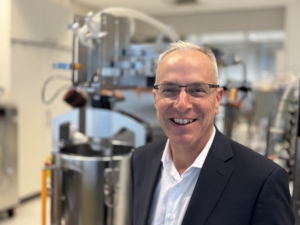
- Andrew Miller, founder of Karuna Therapeutics and lead inventor of Cobenfy, becomes executive chair. Bristol Myers Squibb acquired Karuna for $14 billion in 2024.
- Stephen Brannan, Karuna’s former chief medical officer, will chair Neurosterix’s clinical advisory board.
- Edmund Harrigan, a former Karuna board member who previously held senior positions at Pfizer, joins as an independent director.
“The clinical validation of muscarinic biology has created an important opportunity to develop the next generation of treatments for schizophrenia and other serious neuropsychiatric disorders,” said Neurosterix CEO Fred Callori.
Backstory: Neurosterix was created in April 2024 through a deal between Addex and Perceptive Advisors. The Swiss biotech transferred its allosteric drug discovery platform, several preclinical programs and associated research operations into a newly established company backed by an initial $63 million financing led by Perceptive. The funding was subsequently increased to $65 million.
The transaction was also a significant restructuring for Addex. In exchange for its assets, the company received 5 million Swiss francs (about €5.1 million at the time) and a 20% ownership stake in Neurosterix. Nearly its entire workforce transferred to the new company, with only Addex’s head of finance remaining. A service agreement allowed Addex to continue accessing research staff and infrastructure.
Why the split? For Addex, the deal provided cash while substantially reducing operating costs. At the time, CEO Tim Dyer said it would extend the company’s cash runway beyond 2026, allowing it to focus on its remaining clinical programs and partnerships with Janssen and Indivior.
For Neurosterix, it meant securing the capital and research infrastructure needed to bring Addex’s earlier-stage neuroscience programs into clinical development. Dyer initially served as CEO of both companies, while several senior Addex scientists moved into leadership roles at Neurosterix.
By the numbers: Addex did not participate in the latest financing, and its ownership has fallen from 20% to 8.5%. The company now values its remaining stake at $18.6 million (about €16.7 million), implying an overall equity valuation of approximately $219 million, although this is not a formally disclosed post-money valuation.
The Series B was led by RTW Investments, with new investors Janus Henderson Investors, GV, Ikarian Capital, Affinity Asset Advisors and Dellora Investments joining existing backers Perceptive Advisors and Acorn Bioventures.
Beyond schizophrenia: The financing will also support NTX-819, a negative allosteric modulator of the mGlu7 receptor being investigated for mood and anxiety disorders, and NTX-529, another M4-targeting candidate intended for additional psychosis- and mood-related indications.
What’s next: Neurosterix plans to move NTX-253 into Phase 2 testing but has not specified a start date. The next studies will be crucial to determining whether its selective approach can translate into meaningful clinical benefits and establish a differentiated profile in the increasingly competitive muscarinic schizophrenia market.