Austria builds life sciences momentum
Austria continues to strengthen its position as one of Europe’s most dynamic life sciences locations. New infrastructure, a coordinated national cluster landscape and targeted funding initiatives are reinforcing the country’s role at the interface of research, industry and healthcare.
In Vienna, one of Europe’s established centres for medical research is preparing for its next development step. On October 1, the Medical University of Vienna (MedUni Vienna) will officially open two new buildings, the Eric Kandel Institute – Center for Precision Medicine and the Center for Translational Medicine, which form part of a broader expansion of more than 90,000 m² of research and teaching infrastructure. The new facilities will bring research, teaching and clinical practice closer together and provide state-of-the-art space for translational and personalised medicine. The aim is to enable diagnoses, therapies and prevention to be tailored more precisely to individual patients, supported by molecular insights, data-driven approaches and artificial intelligence.
The new MedUni Campus Mariannengasse, which opens in fall 2027, will also bundle previously scattered preclinical facilities and create a shared environment for around 2,000 students and 750 researchers. For international companies, this is more than an infrastructure story: it strengthens Vienna’s capacity for clinical and translational research and creates new opportunities to engage with academic excellence, clinical practice and potential industrial partners at close range.
A connected ecosystem
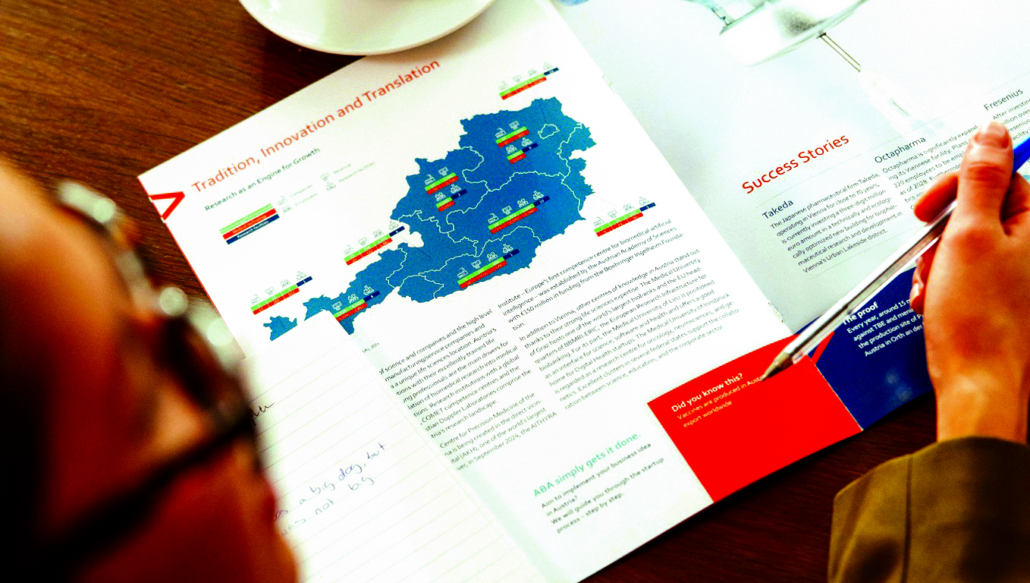
Austria’s life sciences sector has grown into a dense and well-connected ecosystem. The country is home to more than 1,100 life science companies employing more than 73,000 people and generating around €40 billion in annual turnover. The sector covers biotechnology, pharmaceuticals, medical technology, diagnostics, digital health, enabling technologies and specialised service providers. Its strength lies not only in individual companies or institutes, but in the way regional clusters, national initiatives and funding organisations work together. As the national umbrella brand, LISA – Life Science Austria plays a central role in connecting these stakeholders and driving joint activities.
This coordination gives companies access to partners across the value chain: universities, research organisations, hospitals, startups, manufacturing specialists, regulatory experts, suppliers and investors. Vienna is a major node, but other regions, especially Tyrol, also contribute distinctive strengths, from biotechnology and pharmaceutical production to medical engineering and digital health applications. Styria is particularly strong in industrial biotechnology and bioprocess expertise as well as medical technology. With an R&D ratio of more than 5.3%, Styria is one of the strongest research regions in Europe. For foreign companies, Austria offers both scientific excellence and a networked support structure.
Policy backs key technologies
Life sciences are also gaining political visibility as one of Austria’s key technologies. The federal government’s Industrial Strategy 2035 places emphasis on sectors that combine innovation, industrial competitiveness and societal relevance. A dedicated Life Science Action Plan has been announced to further strengthen the framework for research, startups and industrial development. The FFG Life Science Programme is equipped with €95 million for R&D projects for the period 2022 to 2026, while the aws Preseed | Seedfinancing is allocating another €19 million to fund and consult innovative startups. Through INVEST in AUSTRIA, the Austrian Business Agency offers international life sciences companies cost-free support on all location-related questions.
Digital transformation is becoming a central part of this policy mix. The new “Digital Health Austria” initiative supports large-scale collaborative projects that translate digital innovation into practical healthcare applications. Eligible consortia may include companies, startups, research organisations and other relevant stakeholders. The focus is on scalable solutions that address healthcare challenges while integrating scientific, economic and healthcare perspectives from the outset.
Attractive research location
International companies are already using Austria as a base for life sciences activities. MSD, for example, contributes to its global network through three Austrian sites with activities ranging from clinical research to manufacturing and regional operations, employing around 1,000 people in Austria. Ketryx, a company developing AI-supported software for regulated medical technology, has raised a total of $55 million in Series A and Series B from international investors and has chosen
Vienna as an important European location. Epitome Therapeutics, a biotech startup developing precision epigenome editing, launched in 2025 with €4 million in total funding, including backing from aws, FFG and XISTA Science Ventures. Both Ketryx and Epitome Therapeutics were supported by the Austrian Business Agency in establishing their presence in Austria.
Such examples illustrate a broader trend: companies come to Austria for research quality, talent, clinical links, public funding options and access to European markets. The country also offers an attractive R&D environment. Austria’s research intensity remains among the highest in Europe, and the national “Research Premium” gives companies a predictable incentive for eligible R&D expenditure. In a field where development cycles are long and regulatory pathways are demanding, reliable framework conditions are a relevant location factor.
Where to meet ABA and LISA
Austria’s life sciences community will be visible at several international events in autumn 2026. On October 1, MedUni Vienna will officially open two new buildings in Vienna. A few days later, MedTech.Circle 2026 in Linz will bring together medtech, clinical, research and business stakeholders to work on concrete solutions along the patient journey. The Biotech Summit Austria will take place in Innsbruck on October 13-14, followed by the LISAvienna Regulatory Affairs Conference in Vienna on October 15. ABA – INVEST in AUSTRIA and LISA – Life Science Austria will also be present at BIO-Europe in Cologne from November 9-11 and at MEDICA in Düsseldorf from November 16-19. These meetings offer opportunities to connect with the Austrian ecosystem and explore funding and partnering options. Visit the Austrian booths or reach out to schedule a meeting in advance.
The search for Austrian partners is possible year-round via the Austrian Life Sciences Directory: www.lifesciencesdirectory.at
Contact us:
Austrian Business Agency (ABA): investinaustria.at/en
Subscribe to the “Austrian Business Update”
LISA – Life Science Austria: lifescienceaustria.at
Subscribe to the LISA newsletter or connect with LISA on LinkedIn
 Technologiepark Heidelberg
