
Barcelona’s ALLOX raises €9.4M to turn protein maps into drug candidates
Spanish biotech ALLOX has closed a €9.4 million ($10.5 million) seed round, led by Asabys with participation from Spanish and Catalan public investors, to expand its experimental biology and AI platform for targeting "difficult-to-drug" protein-protein interactions and gene-regulating transcription factors. The company has also appointed former Novo Holdings executive Morten Graugaard as independent chair of its board.
Why it matters: Proteins that work by binding other proteins are often considered “undruggable,” because their binding interfaces are difficult to inhibit directly and most proteins have no known alternative site to target, a 2023 Nature paper co-written by two ALLOX founders notes. The company aims to find allosteric sites, regions outside a protein’s binding interface that can still regulate its activity, and the round is meant to help it develop its own small-molecule drugs that bind those sites.
How it works: Most marketed allosteric drugs were found by chance, CEO and co-founder Júlia Domingo has said. The platform is designed to map such sites systematically: “By combining large-scale functional data with predictive AI, we aim to unlock a much broader range of challenging drug targets,” she said in the press release.
Graugaard, the new chair, sees the data as the platform’s edge: “Importantly, ALLOX fills a critical data gap, enabling the development of functional molecules rather than simply identifying binders,” he added in the announcement. Graugaard is also chief business officer of Orbis Medicines.
Follow the money: Asabys led the round through its €180 million Sabadell Asabys II fund, joined by Spain’s state innovation agency CDTI, via Innvierte, and the Catalan government’s Institut Català de Finances (ICF). The lead investor first backed ALLOX, a Centre for Genomic Regulation spinout, with a 2023 convertible loan.
CDTI has disclosed three Innvierte investments in ALLOX alongside Asabys: €1.8 million in 2024, €1.07 million in 2025 and €1.8 million this summer. The release doesn’t say which of these the €9.4 million includes, or how much each investor put in.
“We don’t disclose the breakdown of the round by investor or by tranche,” Domingo told European Biotechnology. “The new financing will fund the next phase of the company: advancing our internal drug discovery programmes, building a focused pipeline of proprietary small-molecule assets, growing our drug discovery team (including a Chief Scientific Officer), and continuing to scale our platform and develop AI models trained on our proprietary functional data. It also positions us to establish strategic partnerships with pharmaceutical companies and reach the milestones needed for a future Series A.”
Zoom in: The platform measures the effects of thousands of mutations on a protein in parallel, revealing the sites that govern the protein’s folding and interactions, including potential new binding pockets. ALLOX’s only named asset, ALX-001, is a selective allosteric inhibitor in preclinical development, according to a CDTI grant notice on the company’s website.
Co-founder Ben Lehner’s lab presented the method in a 2022 Nature paper and, in the 2023 one, measured more than 26,000 mutations in the cancer protein KRAS, genetically validating multiple surface pockets as allosterically active.
“Our first drug discovery programme has progressed well,” Domingo added in her comments to European Biotechnology. “Using the functional maps generated by our platform, we have identified novel small molecules that alter the target protein’s function through an allosteric mechanism of action. We are now advancing these molecules further. Since then, we have initiated three additional programmes and plan to start more. Our initial focus is on oncology and inflammation and immunology (I&I) […] As our platform is target-agnostic, it can also be applied across other therapeutic areas, including through partnerships.”
Reality check: ALLOX hasn’t disclosed ALX-001’s target, data or how many proteins it has mapped, or specific timelines.
Allosteric drugs from two U.S. companies are already in the clinic: Relay Therapeutics is testing zovegalisib in a Phase 3 breast cancer trial, and Gain Therapeutics has tested rexaceract in a Phase 1b trial in Parkinson’s disease.
Bottom line: ALLOX has moved beyond mapping allosteric sites to identifying molecules that change protein function. The next test is whether it can turn those early discoveries into viable drug candidates.

 Max Kratzer / Plectonic
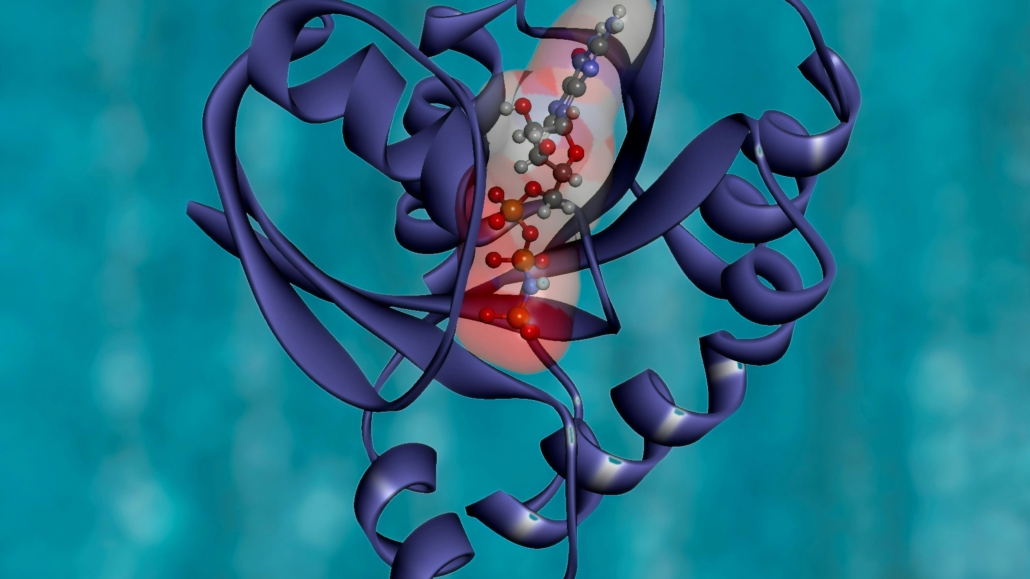
 NOD-Proteindesign.Andreas Heddergott/TUM.jpg