$15 billion deal: Roche bets on China — and questions Germany’s future
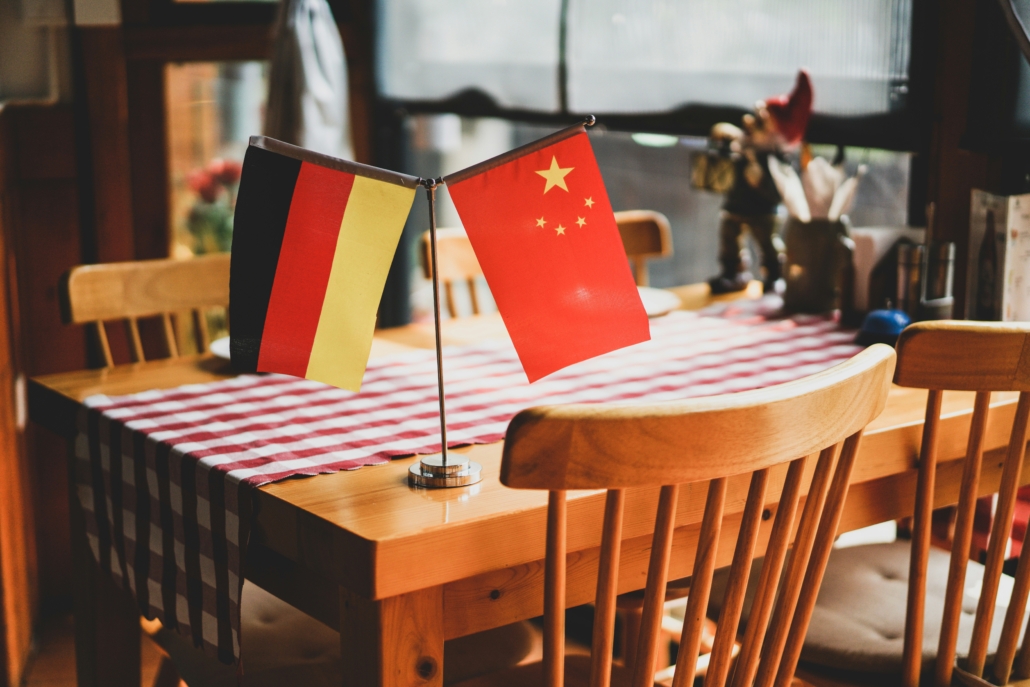
The Swiss pharmaceutical group has agreed to another, deeper ADC partnership with China’s Hansoh Pharma, with potential milestone payments exceeding $15 billion. The deal comes amid mixed developments: While China wants to do more to protect its biotech technologies from flowing abroad, Roche’s new investment decisions in Germany are on hold for now.
Why it matters: Roche is expanding its collaboration with Chinese pharmaceutical company Hansoh. A year after their first agreement covering an antibody-drug conjugate (ADC) candidate, the two companies have now agreed to another, substantially broader development and licensing partnership. It covers a wide portfolio of ADC programs targeting various cancers. Hansoh could receive more than $15 billion in total development, regulatory and commercialization milestone payments, as well as sales-based royalties. In addition, it will receive a $400 million upfront payment and a further $110 million on the agreement’s first anniversary.
Zoom in: The agreement covers two ADC candidates that Hansoh is already developing preclinically, along with additional programs against targets proposed by Roche, for which Hansoh will contribute its own ADC technology. The Chinese company will initially develop the candidates through completion of global Phase 1a trials. Roche will then take over further development and commercialization outside mainland China, Hong Kong, Macau and Taiwan. Hansoh retains the rights in those territories. For up to two programs, the company can also participate in global development and receive additional financial benefits in return.
Backstory: Last year, Roche paid $80 million upfront to Hansoh for rights to HS-20110 outside China and offered potential milestone payments of up to $1.45 billion. The candidate, which targets CDH17, is being investigated as a potential treatment for colorectal cancer and other solid tumors. The renewed collaboration shows that Roche views Hansoh as more than a supplier of a single drug candidate and wants to use its technology platform for additional programs.
The big picture: Chinese companies are becoming increasingly important partners for international pharmaceutical groups, contributing their own drug candidates, platforms and clinical development work. Hansoh itself has recently increased its research spending and has a broad pipeline of innovative medicines. Other international pharmaceutical groups, including GSK, also work with the company.
Yes, but: The agreement comes at a time when China wants to exert tighter control over the transfer of certain key technologies abroad. A proposal that became public on October 16 would add five biomedical technologies to China’s export control list. These include platforms for novel genetic therapies. The planned rules aim to limit the outflow of strategically important technologies. However, they do not amount to a blanket ban on international pharmaceutical collaborations. Under the plans disclosed so far, licensing agreements, partnerships and contract research services would remain possible.
- This is crucial to understanding the Roche-Hansoh deal. China is not simply closing off its biotech industry, but is trying to exert greater control over access to technologies and their transfer. At the same time, the government continues to court foreign capital and research: An action plan presented in the summer includes easier market access in the pharmaceutical industry, better conditions for foreign research centers and simplified procedures for certain cross-border investments. What authorities in the country no longer want to do is stand idly by and watch a “sell-off.”
Meanwhile, Roche is sending a different signal in Germany: Daniel Steiners, head of Roche Germany, has announced that all new investment decisions will be deferred for the time being. He attributes this to the German government’s health policy, criticizing in particular the additional burdens planned for the pharmaceutical industry under legislation to stabilize statutory health insurance contribution rates. Roche employs around 18,600 people in Germany. The pause does not mean ongoing projects will automatically be stopped, but it raises the question of the conditions under which the group will be willing to invest in Germany in the future.
The two developments are, of course, independent of each other: In China, this is a licensing and development collaboration; in Germany, it is the deferral of future investment decisions after the Swiss pharmaceutical group poured billions into its Penzberg and Mannheim sites over many years. Roche has not announced a shift in investment to China; it has, however, pledged a $50 billion investment in the U.S. last year.
- Will Chinese innovations be manufactured there in the future? The U.S. pharmaceutical lobby is not particularly pleased about this, and the future strategy toward China remains the subject of fierce debate there. Nevertheless, the contrast is striking. While Roche is committing substantial sums to developing new cancer medicines with a local partner in China, it is explicitly making its willingness to invest further in Germany contingent on reliable operating conditions.
- For Germany’s pharmaceutical industry, this is another warning signal, following similar signals from Eli Lilly and Boehringer. This is particularly true in an industry where research collaborations and long-term development decisions are made globally, billions are at stake, and Roche shareholders also want to see the considerable sums invested eventually returned with a healthy profit.