

Phinomics Brings a New Layer of Cancer Biology from the U.S. to Berlin
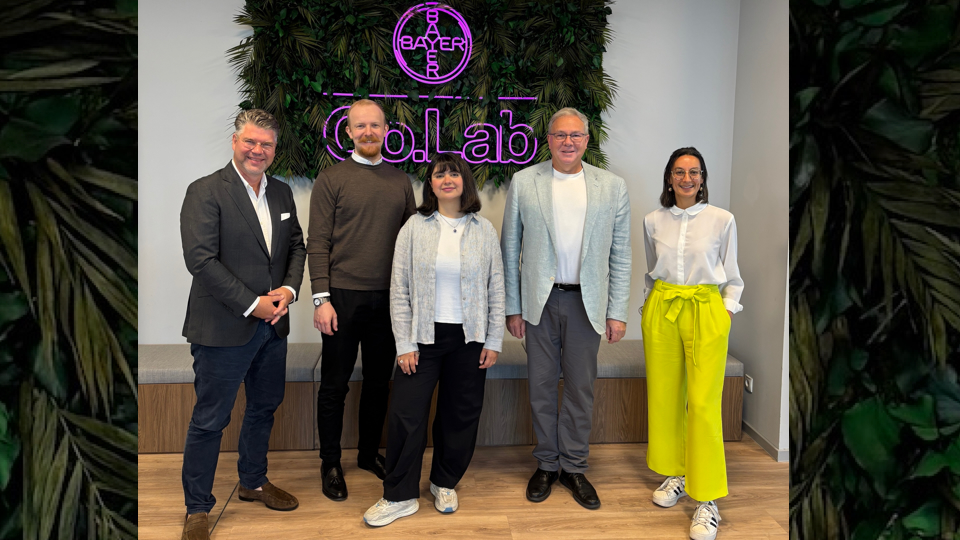
U.S. biotech company Phinomics has established its European hub at Bayer Co.Lab Berlin, bringing a research focus that could reshape how scientists understand tumor evolution and drug resistance. The focus is on extrachromosomal DNA rings.
U.S. biotech company Phinomics has established its European hub at Bayer Co.Lab Berlin, bringing a research focus that could reshape how scientists understand tumor evolution and drug resistance. Rather than concentrating solely on artificial intelligence, the Stanford University spinout is betting on an overlooked biological driver of cancer: extrachromosomal circular DNA (eccDNA), small circular DNA molecules that exist outside chromosomes and may play a key role in tumor progression and treatment resistance.
Why extrachromosomal DNA matters
The traditional view of cancer genetics has focused on mutations and copy number changes within chromosomes. Researchers have long known that cancer cells can amplify chromosome segments or alter chromosome numbers. More recently, however, it has become clear that many tumors also harbor extrachromosomal circular DNA (eccDNA), sometimes referred to collectively as the “circulome.”
These circular DNA molecules frequently carry oncogenes and can replicate independently of the chromosomes. Unlike chromosomal DNA, they are distributed randomly during cell division, meaning daughter cells may inherit widely different numbers of eccDNA molecules. The mechanisms underlying eccDNA formation remain incompletely understood, but their behavior represents a form of non-Mendelian inheritance that responds rapidly to environmental pressures, including targeted cancer therapies.
The phenomenon resembles bacterial plasmids, which carry genes conferring antibiotic resistance. Likewise, cancer cells containing abundant eccDNA can rapidly produce large quantities of growth-promoting proteins while continuously generating new eccDNA variants. This accelerated evolutionary process may allow tumors to escape therapies designed to inhibit those very oncogenes.
Because eccDNA is unevenly inherited during cell division, tumors constantly generate genetically distinct subpopulations. This intratumoral heterogeneity is considered one of the major reasons cancers eventually become resistant to treatment: while sensitive cells are eliminated, resistant clones enriched in advantageous eccDNA continue to expand.
Today, eccDNA has been implicated in at least half of all cancers. Yet despite growing evidence of its biological importance, it has remained largely invisible to conventional sequencing technologies because both isolating these DNA circles and analyzing them bioinformatically have proven technically challenging.
From resistance mechanisms to drug targets
This is where Phinomics aims to differentiate itself. According to the company, its proprietary technology detects the circulome with approximately 100-fold greater sensitivity than conventional approaches. The resulting data are then integrated with genomic, transcriptomic, epigenomic, and proteomic information from the same patient sample.
The company uses explainable AI models to analyze this multi-omics dataset with the goal of identifying previously hidden disease mechanisms, novel therapeutic targets, and early resistance pathways.
That strategy differs from many AI-driven drug discovery platforms, which primarily rely on increasingly large datasets. Phinomics argues that the principal limitation is not computational power but incomplete biological information. If a critical layer of cancer biology is absent from the underlying data, even the most sophisticated foundation models cannot incorporate it into their predictions.
Berlin as a gateway to Europe
Phinomics selected Bayer Co.Lab Berlin as the base for its European expansion. From there, the company plans to establish collaborations with pharmaceutical companies and academic institutions while applying its platform primarily to oncology.
The Berlin ecosystem includes Charité – Universitätsmedizin Berlin, the Berlin Institute of Health (BIH), the Max Delbrück Center, and, in the future, Riverside Labs and the Berlin Center for Gene and Cell Therapies.
For Chief Business Officer Guido Mathews, the scientific environment was a decisive factor.
“The participation of Charité and the Max Delbrück Center in the international Cancer Grand Challenges initiative on DNA circles has made Berlin a globally recognized hotspot for eccDNA research,” Mathews told transkript. “We always evaluate the entire biomedical ecosystem when selecting a location, and Berlin offers exceptional opportunities for collaboration.”
A rigorous selection process
Despite Mathews’ previous career at Bayer, he said Phinomics underwent the same demanding evaluation process as every other startup seeking admission to Bayer Co.Lab.
Extrachromosomal DNA is rapidly emerging as a distinct field within cancer biology. It may explain why many tumors eventually relapse despite initially successful treatment and why they can evolve resistance so quickly.
If Phinomics’ platform proves clinically valuable, eccDNA analysis could become part of drug discovery at a much earlier stage, enabling researchers to anticipate resistance mechanisms before selecting therapeutic targets rather than studying them only after resistance has emerged.
For Mathews, the company’s broader message extends beyond eccDNA itself.
“The future performance of AI in drug discovery will depend less on building larger models than on generating more complete biological data,” he said. “Our platform captures a previously inaccessible layer of cancer biology through extrachromosomal circular DNA and integrates it with other omics datasets into a unified AI model and proprietary knowledge graph. This provides AI systems with a much richer, causally informed biological foundation and has the potential to significantly improve their predictive performance.”
If that vision is borne out, Phinomics believes eccDNA could add an entirely new dimension to precision oncology by making an important, previously hidden layer of tumor biology visible to researchers and drug developers.
 BioNTech SE
 AstraZeneca plc
 Knowbio with Sweden.se