
Indivumed, ready to set sail to the clinic
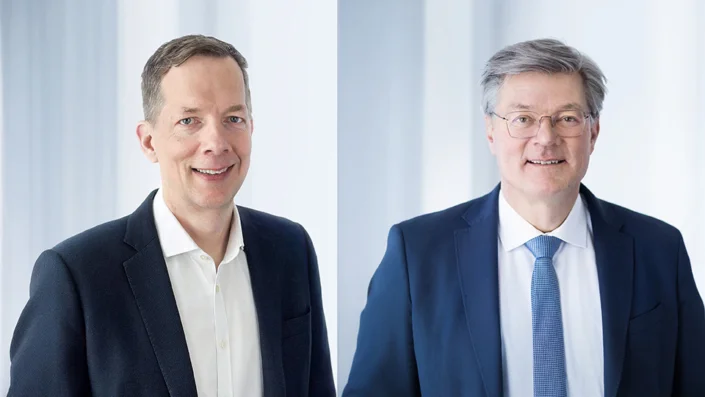
With the separation from the biobank service business, Hamburg-based Indivumed has repositioned itself as a therapeutics biotech. Its earlier work remains the core of its medical knowledge and the source of novel targets. To advance the already pre-validated selection more quickly, the company is now looking for partners. The response has been strong, say Matthias Evers and Hartmut Juhl in conversation with European Biotechnology Magazine.
EBM. Mr Juhl, Mr Evers, we have been following Indivumed for some time because we see it as an example of how a biotech company with its own drug pipeline can develop from a service-based business model. What has happened and changed since our last conversation a year ago?
Evers. A year ago, the focus was primarily on opening our treasure trove in the direction of antibody development. Since then, we have built a comprehensive universe of targets and prioritised around 25 targets in colorectal cancer alone. In parallel, we have established antibody triage based on organoid models and are currently closing the validation loop. At the same time, we have also made significant progress with small molecules.
EBM. Does the market now have a better understanding of what Indivumed stands for?
Juhl. Indivumed is increasingly perceived as a highly innovative biotech company with its own pipeline. We do not see ourselves as a pure target company. Our approach is to bring together the patient profile, the target and the appropriate therapeutic modality in one overall package, thereby reducing development risks at an early stage. An isolated target alone is no longer enough today.
EBM. At the time, the biotech sector was not exactly dynamic. How has the market environment developed?
Evers. A year ago, the situation in early-stage development was still considerably more difficult, although it has not yet become much better. With robust clinical data, one is at least now attracting greater attention again from potential partners and investors. Before the clinic, however, the path remains demanding and capital-intensive, and that is precisely where our opportunity lies.
EBM. If we look more closely at your pipeline: which indication is currently your focus?
Juhl. Even though our biobank and database comprise patient cohorts from more than 10,000 different tumours – including lung, liver, pancreas, kidney and ovarian cancers, for example – our current focus is on colon cancer. There continues to be a high medical need here, as well as attractive market opportunities. Our approximately 25 identified targets demonstrate the potential of our platform. Particularly important is the validation of our approach: we have tested all approved mechanisms of action in colon cancer against our screening models and can represent more than 83% of them. For the remaining mechanisms, there are understandable biological reasons why they do not become visible in the standard setting. Such results do not go unnoticed in the pharmaceutical industry and open doors to new partnerships.
EBM. Does Indivumed’s long history help today, or is that chapter closed?
Juhl. The long preliminary phase forms the robust foundation of the company as it stands today. Without it, we would not be where we are now. The sale of the service business has significantly strengthened us financially, without the earlier preparatory work losing any of its importance. On the contrary, we are using our foundation of high-quality tissue, patient-proximate molecular and clinical data and can now focus, at a much higher pace, on what was our goal from the outset: the in-house development of new cancer therapeutics.
EBM. With so many targets, the question of focus inevitably arises, as does the question of financing. How can you, and how do you intend to, manage such a large number?
Evers. It is not just about capital, but also about strategic partners for early development projects. On a smaller scale, we are already doing this today together with several top pharmaceutical companies in project research. This is currently generating a significantly stronger response. For us, it is about speed, but of course the same applies to potential partners. Access to our targets will not remain open indefinitely. The decisive point is this: our offer goes far beyond targets. We can not only identify new targets, but also assess which patient population will carry the clinical benefit and whether, for example, an ADC, a bispecific antibody or another modality is the right approach. We carry out the validation cascade ourselves and generate additional valuable intellectual property with specific sequences and epitopes. This gives us a very broad technological base.
EBM. Is there not also a danger in such breadth?
Juhl. The greater danger lies more at the scientific level, because by its very nature, much of it appears highly interesting. That is why, step by step, we will prioritise the programmes that make the most sense in terms of timeline, medical benefit and market potential.
EBM. Still, is that scientific drive still central to who you are, with your deep expertise in patient-derived tissues and organoid models remaining your secret weapon in drug testing?
Juhl. Absolutely. Only in these organoids do you have patient-relevant models in which you can test both the efficacy and the safety of a drug. The great wave surrounding such organoid models, which is also building in some large pharmaceutical companies and even extends to the establishment of new research institutes, is a clear indication of where modern cancer research is currently heading. Because of the high quality of our tissue, which we obtain in our partner clinics worldwide under the same standards, we are building our own organoid biobank, with which we not only validate our targets but also stratify patients and test the modalities for functionality.
EBM. A completely different topic, but one that, in our perception, is moving the community everywhere, including at partnering conferences: does Europe need to worry given the dynamism in China?
Evers. China has developed into a highly dynamic market, particularly with regard to the speed of clinical development and infrastructure. At the same time, Chinese companies – like Western pharmaceutical companies– are looking for new targets or faster routes for known approaches. Chinese partners could therefore certainly be a good fit for us. From our point of view, however, fear is misplaced if one can realistically assess one’s own value. For this reason too, we now see the right time as having arrived: Indivumed is like a small speedboat in the harbour with its engine running, ready to cast off and set out at high speed towards the clinic together with its international network of oncologists. Anyone who arrives too late will have to watch from the shore.
 BioNTech SE
 AstraZeneca plc