

A fresh start for Molecular Health: technology core becomes start-up Lucera
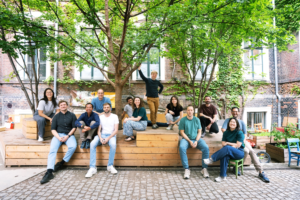
A restart from within: Molecular Health is becoming Lucera. After years of shifting corporate fortunes, a substantial part of Heidelberg-based Molecular Health is continuing in a new form. An investor consortium has acquired the company’s pharma technology business and relaunched it as Lucera GmbH. Dr Friedrich von Bohlen remains at the helm, while Dr Stephan Brock, the mind behind the Dataome data engine, also stays on board as CTO.
The aim of the restart in Heidelberg is to develop the technology built up over many years for data-driven decision support in drug development in a more focused, leaner way, and closer to the market.
For the German biotech scene, the transaction is both a look back and a look ahead. Molecular Health was once one of the early hopefuls in precision medicine. The company was already focusing on linking biomedical data at a time when terms such as knowledge graph or artificial intelligence were still far from standard industry vocabulary. Commercial execution, however, proved challenging. Like many pioneers in data-driven medicine, the company had to adapt its strategy several times to changing market conditions.
Data-driven pharma decisions
Lucera will now carry forward the part of the company that has established itself as a viable business model in recent years. According to the company, it has already served more than 20 pharma, biotech and investment clients worldwide. Around 25 employees are moving from Molecular Health to the new company at launch.
At the top are two executives who have been familiar with the technology for years: former Molecular Health founder and long-time industry investor Friedrich von Bohlen as CEO, and Stephan Brock as CTO. Lucera is being financed by a consortium of institutional and private investors.
At the centre remains the Dataome knowledge platform, which the company says has been developed over more than 15 years. The database integrates information from hundreds of public and proprietary sources and connects it through a semantic knowledge graph. Unlike many generative AI systems, the platform is intended not only to deliver predictions, but also to explain them biologically and trace them back to the underlying evidence.
Curated data are the real asset
The approach addresses a problem that has become larger, rather than smaller, with the rise of AI in drug development: while ever more data and models are available, the question remains how robust the decisions derived from them really are. This is precisely where Lucera sees its role. The company promises to bring together biological relationships, clinical evidence and development risks in such a way that targets, biomarkers, clinical endpoints or potential side effects can be assessed earlier and on a more solid basis.
Applications range from target validation and clinical trial planning to due diligence projects for investors. The simulation of trial trajectories and the identification of suitable patient groups are also part of the company’s offering.
The founding of Lucera therefore marks less the start of an entirely new technology than the continuation of a long-standing development under new conditions. After years in which Molecular Health repeatedly searched for the right business model, the economically viable core of the company is now intended to grow independently. For investors, this is a bet that the true substance – data, technology and expertise – is more valuable than the corporate shell in which it had previously been housed.
An inverted Gorbachev
Historians may wish to look away for a moment, but Friedrich von Bohlen’s data ventures, which began with Lion Biosciences before the turn of the millennium, are perhaps best described by an inversion of the famous Gorbachev quote: “life will punish him who comes too early.” Neither artificial intelligence nor the underlying machine learning was sufficiently present in reality, or in people’s minds, for von Bohlen’s bold ideas to find the resonance they needed. As a result, larger financial injections were missing at many milestones – funding that could have enabled the company itself to accelerate more forcefully and on a larger scale in this direction.
Dietmar Hopp, founder of German software giant SAP, was one of the key investors along the path from Lion to Molecular Health. He is no longer involved in the new company Lucera. The entanglements of the former investment company dievini Holding, the family office from Hopp, had already been unwound before the sudden death of Christof Hettich, with Hettich and von Bohlen being bought out with CureVac shares. The holding company is now said to still contain six biotech activities, but Hopp’s sons reportedly show no particular interest in these risky investment excursions of their father. Heidelberg Pharma and others, however, are certainly waiting for some room to manoeuvre on the legacy-investor front. Molecular Health has now freed itself in its own way.
Whether this calculation pays off will have to be shown in a market where almost every AI company in drug discovery now promises to shorten development timelines and identify risks earlier. Lucera is betting on a distinction that management particularly emphasises: the focus should not be on prediction alone, but on its biological and medical traceability.
 Phinomics