kyron.bio teams up with Servier to test “precision glycosylation” as a new lever for antibody performance
Paris-based kyron.bio has signed a strategic partnership with French pharma group Servier to glycoengineer an antibody selected by Servier. This agreement marks an early proof-of-concept deal designed to show the company can reliably “dial in” a specific, pre-defined N-glycoform on a therapeutic antibody.
ADVERTISEMENT
The collaboration is structured as a funded research effort: kyron.bio will run the glycoengineering work, Servier will pay for the associated R&D, and Servier will hold an option to expand into additional antibody engineering and development opportunities depending on the results. Financial terms were not disclosed.
Glycans: a largely untapped design variable in antibodies
Antibodies aren’t just proteins; they also carry sugar structures (glycans) that can influence immune effector functions, stability, pharmacokinetics, and batch-to-batch consistency. In most conventional manufacturing, those glycans end up as a heterogeneous mix, good enough for many products, but a headache when you’re trying to optimize or reproduce very specific biological behavior.
kyron.bio is betting that the next wave of antibody differentiation won’t come only from new targets or fancy formats, but from tighter control over glycosylation, turning glycans from “manufacturing noise” into something closer to an engineered feature. The company has previously described its approach as a way to achieve unusually high consistency in glycan structures by combining engineered Chinese hamster ovary (CHO) production systems with proprietary antibody-side modifications, positioning glycosylation as a programmable parameter rather than a variable to tolerate.
From “Golden Ticket” to formal collaboration
The partnership also formalizes a relationship that started through Servier’s startup-scouter ecosystem. kyron.bio notes it won Servier’s “Golden Ticket” in 2024, which provided access to lab space, mentorship, and closer scientific exchange. Servier has publicly framed the Golden Ticket as a way to accelerate promising life science projects via resources, mentoring, and network access.
For Servier, the move fits a broader strategy of using partnerships to extend its innovation engine, particularly in priority areas like oncology and neurology, fields where antibody performance (and manufacturability) can be decisive.
kyron.bio’s trajectory so far
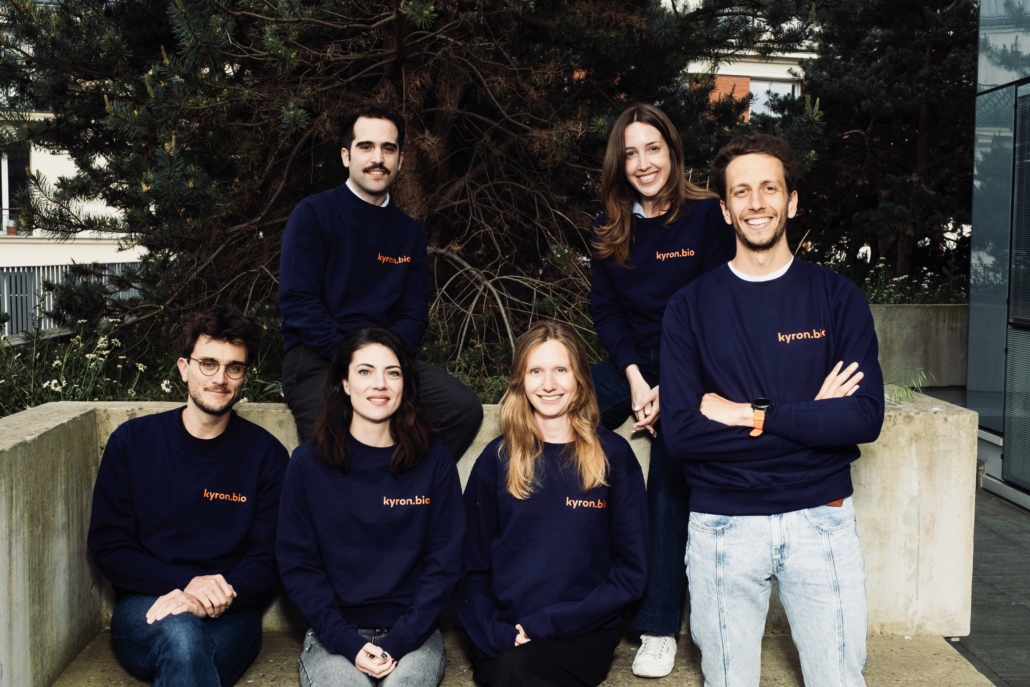
The Servier deal lands less than a year after kyron.bio closed a €5.5 million seed round (led by HCVC, with Verve Ventures, Entrepreneur First, Saras Capital and angels) to scale its glycan-engineering platform and push toward preclinical programs. The company is also based at Paris Biotech Santé (Hôpital Cochin), one of the capital’s better-known life-science hubs, and has been building visibility through European funding and ecosystem programs.
Because the antibody target isn’t disclosed, the most important near-term signal will be the technical confirmation that kyron.bio can deliver clear, reproducible control of the requested glycoform on Servier’s chosen antibody, in a way that looks scalable and transferable.
In any case, the deal is a useful marker that precision glycosylation – long discussed in antibody circles but often difficult to industrialize – is starting to look investable and testable inside pharma R&D, not just in academic glycobiology.