Relation deepens GSK alliance with $110M deal
London-based Relation Therapeutics has expanded its research collaboration with GSK in an agreement worth up to $110 million (€97 million), as the AI biotech launches a foundation model designed to predict how human cells respond to experimental treatments.
Why it matters: The deal moves Relation’s relationship with GSK beyond the discovery of targets in specific diseases and into the infrastructure underlying its broader AI platform. The new funding will help Relation generate the large, experimentally produced datasets needed to train MORGAN, its newly unveiled model of cellular biology.
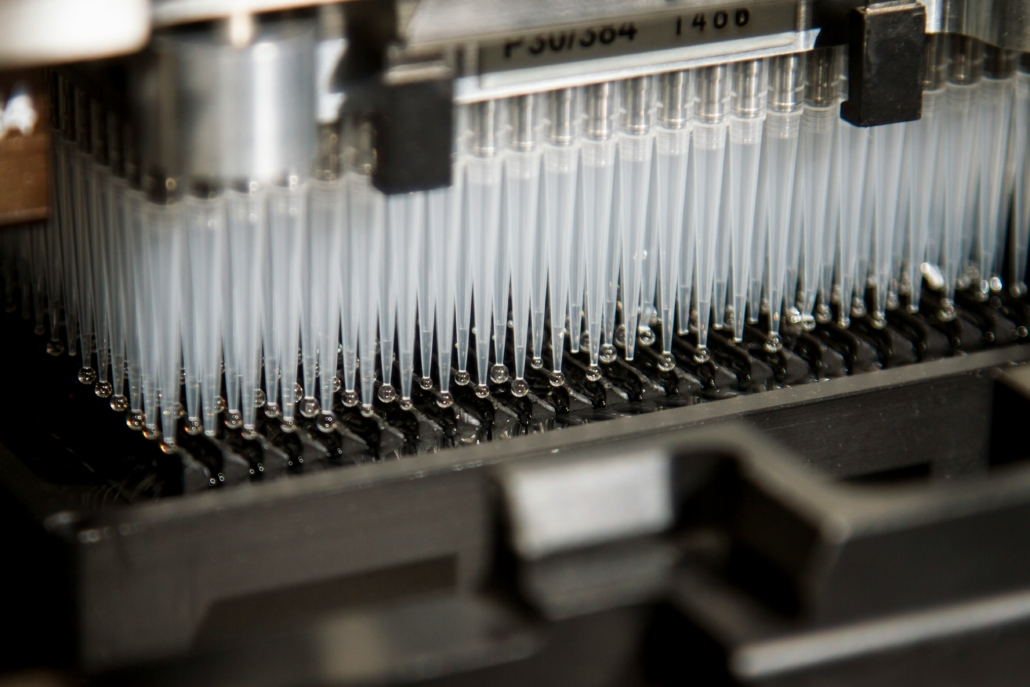
Zoom in: Relation will use automated laboratories and human cellular disease models to study how cells respond over time to genetic changes and drug interventions.
- The experiments will generate multiple molecular readouts, known as multi-omics data, that GSK and Relation can use to investigate biological pathways and identify potential drug targets.
- Relation could receive up to $110 million through a combination of upfront and success-based milestone payments. The companies did not disclose how much is guaranteed upfront, which diseases the research will cover or how resulting targets and commercial rights will be divided.
How it works: MORGAN – short for Multi-Omic Regulatory Genomics using Artificial Neural Networks – is a general purpose model which can be applied across cell types and to specific disease areas. The company says it will generate “petascale” training datasets through automated, high-throughput cellular experiments rather than relying mainly on published or publicly available biological data.
The backstory: GSK first partnered with Relation in December 2024 through two multi-program agreements targeting fibrotic diseases and osteoarthritis.
- Relation received $45 million, including a $15 million equity investment, and became eligible for another $63 million in research payments. The agreements also included development and commercial milestones averaging $200 million per target, plus royalties.
- Those programs use Relation’s Lab-in-the-Loop platform to combine data derived directly from patient tissue with functional experiments and machine learning. The new collaboration appears to extend that approach by producing datasets that can train models across a wider range of biological questions.
Big picture: Relation has rapidly built several routes for turning its target-discovery platform into medicines.
- In December 2025, Novartis committed $55 million through upfront cash, research funding and an equity investment for a multi-program collaboration in atopic diseases. Relation could receive up to $1.7 billion in milestones, while Novartis holds worldwide development and commercial rights to resulting targets.
- A month later, Relation agreed to establish jointly owned companies with investor Deerfield Management around selected targets discovered through its platform. Deerfield will contribute development planning and due diligence support, while both partners could receive royalties from future products.
- Relation also raised another $26 million from existing investors DCVC, Magnetic Ventures and NVentures, Nvidia’s venture capital arm, alongside the Novartis agreement. Nvidia had previously co-led a $35 million financing in 2024.
The bottom line: The GSK deal gives Relation a way to build the expensive infrastructure behind its AI ambitions: automated laboratories generating large volumes of proprietary biological data to train MORGAN.
- That model is becoming more common in AI drug discovery, as companies find that public datasets are often too fragmented, inconsistent or unspecific to support reliable predictions. The competitive advantage may therefore come not only from better algorithms, but from owning the machines and experiments that produce better training data.