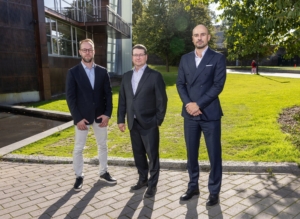


Brenus adds €11M to colorectal cancer vaccine development
French biotech Brenus Pharma has raised an €11 million Series A extension to complete the Phase 1 development of its lead colorectal cancer immunotherapy and advance a second programme from its platform.
Why it matters: The Lyon-based biotech is trying to bring immunotherapy to microsatellite-stable metastatic colorectal cancer (MSS mCRC), the form accounting for the large majority of metastatic cases but generally resistant to checkpoint inhibitors.
- Unlike personalised cancer vaccines, its lead candidate STC-1010 is manufactured in advance from established colorectal cancer cell lines, potentially making it faster and cheaper to supply.
Zoom in: The extension brings the Series A, which began with a €22.2 million financing in September 2024, to €33.2 million. Brenus said it has raised €38 million since its creation, including other equity and non-dilutive funding.
- Existing investors Angelor, UI Investissement, Crédit Agricole, Noshaq, Orsa and BIO JAG participated in the extension.
- Belgian investment group Sambrinvest and Korea Omega Investment Corp. joined as new investors, giving Brenus its first institutional shareholder from the Asia-Pacific region. Bpifrance also provided non-dilutive financing.
How it works: STC-1010 is an off-the-shelf, whole-cell therapeutic cancer vaccine made using three human colorectal cancer cell lines.
- The cells are exposed to chemotherapy, irradiation and heat shock to imitate the biological stress experienced by tumours during treatment. They are then chemically modified to increase their visibility to the immune system and inactivated before administration.
- This process is intended to produce a broad collection of tumour-associated proteins and resistance-related antigens. Rather than targeting one mutation or creating a vaccine individually for each patient, Brenus aims to train the immune system against several features shared by heterogeneous and evolving colorectal tumours.
The big picture: MSS tumours are often described as immunologically “cold” because they attract relatively few tumour-killing T cells and create an immunosuppressive microenvironment. By comparison, the less common MSI-high form of colorectal cancer contains more mutations and is substantially more responsive to checkpoint blockade.
- Brenus is therefore not simply adding another checkpoint inhibitor. Its strategy is to generate an immune response against the tumour first, potentially making MSS disease more visible to immune cells.
What to watch: STC-1010 is being tested alongside low-dose cyclophosphamide, which may reduce immune-suppressing regulatory T cells, and GM-CSF, a protein used to recruit and activate immune cells around the vaccine injection site. Patients also receive standard first-line chemotherapy, with or without the anti-angiogenic drug bevacizumab. The Phase 1/2a study is expected to enrol about 90 patients across Europe and the U.S.
- Brenus previously reported disease control in all six patients included in an early analysis, with no dose-limiting toxicities after a median follow-up of six months. However, the sample was very small, patients also received established therapies and the study has no randomised control arm, making it too early to determine how much STC-1010 contributes to the results.
What’s next: The proceeds of the fundraising will be used to complete the ongoing Phase 1 portion of the BreAK-CRC001 study and advance Brenus’ next drug candidate.