
Adaptyv raises $40M for AI-run wet labs
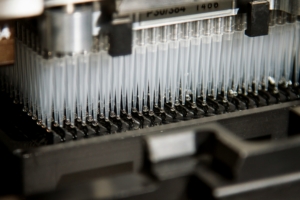
Swiss biotech Adaptyv has raised a $40 million (€34.5 million) Series A to expand its automated protein-testing labs, betting that wet-lab capacity will become a critical bottleneck as AI models generate ever more biological designs.
Why it matters: AI can already propose thousands of new proteins faster than researchers can experimentally test them. Adaptyv wants to close that gap by building automated labs that AI systems can access directly, eventually allowing agents to design an experiment, receive real-world results and decide what to test next.
- The round was led by Highland Europe, with existing investors Ace Ventures, ByFounders and Y Combinator also participating. Adaptyv previously raised an $8 million Seed round.
How it works: The Lausanne-based company’s platform takes a digital protein sequence through DNA synthesis, protein expression and experimental testing, returning physical data on whether the designed molecule actually behaves as intended. Customers can send designs through Adaptyv’s web platform or connect through an API, opening the door for AI agents to request experiments without a scientist manually managing each iteration. That is the basis for what Adaptyv calls “agentic biology”: a closed design-build-test-learn loop in which AI does not stop after proposing a molecule but uses experimental feedback to choose its next designs.
Zoom in: Adaptyv recently put that concept to the test with Anthropic. Claude was used to design protein binders against 16 targets before 1,320 designs were sent to Adaptyv’s automated lab for experimental validation. Of those, 354 bound their target, for an average hit rate of 26.8%. Adaptyv said Claude’s designs would have beaten the winning designs in five of six comparable protein-design competitions.
By the numbers: Adaptyv says it has increased laboratory throughput more than fivefold over the past year and now serves more than 100 customers. They include AI-biotech companies Chai Discovery and Boltz as well as Roche and Novo Nordisk.
- The new cash will help roughly triple lab capacity by the end of 2026. Adaptyv is expanding its Lausanne operation and plans to open another lab and office in London in the fourth quarter, while growing from about 25 employees to around 60.
What’s next: The company also wants to move beyond protein-binding experiments into developability and broader biophysical testing, followed by more complex modalities including peptides, antibody-drug conjugates and degraders, and eventually cell-based assays.
The big picture: Much of the investment flowing into AI drug discovery has focused on better models and more computing power. Adaptyv is making the opposite infrastructure bet: models may soon be able to generate hypotheses faster than laboratories can test them. Its proposed answer is what the company calls a “biological gigafactory” — enough standardized experimental capacity for AI systems to repeatedly confront their predictions with biological reality.